Відбувся Синод Єпископів УГКЦ 2024 року: що варто знати?

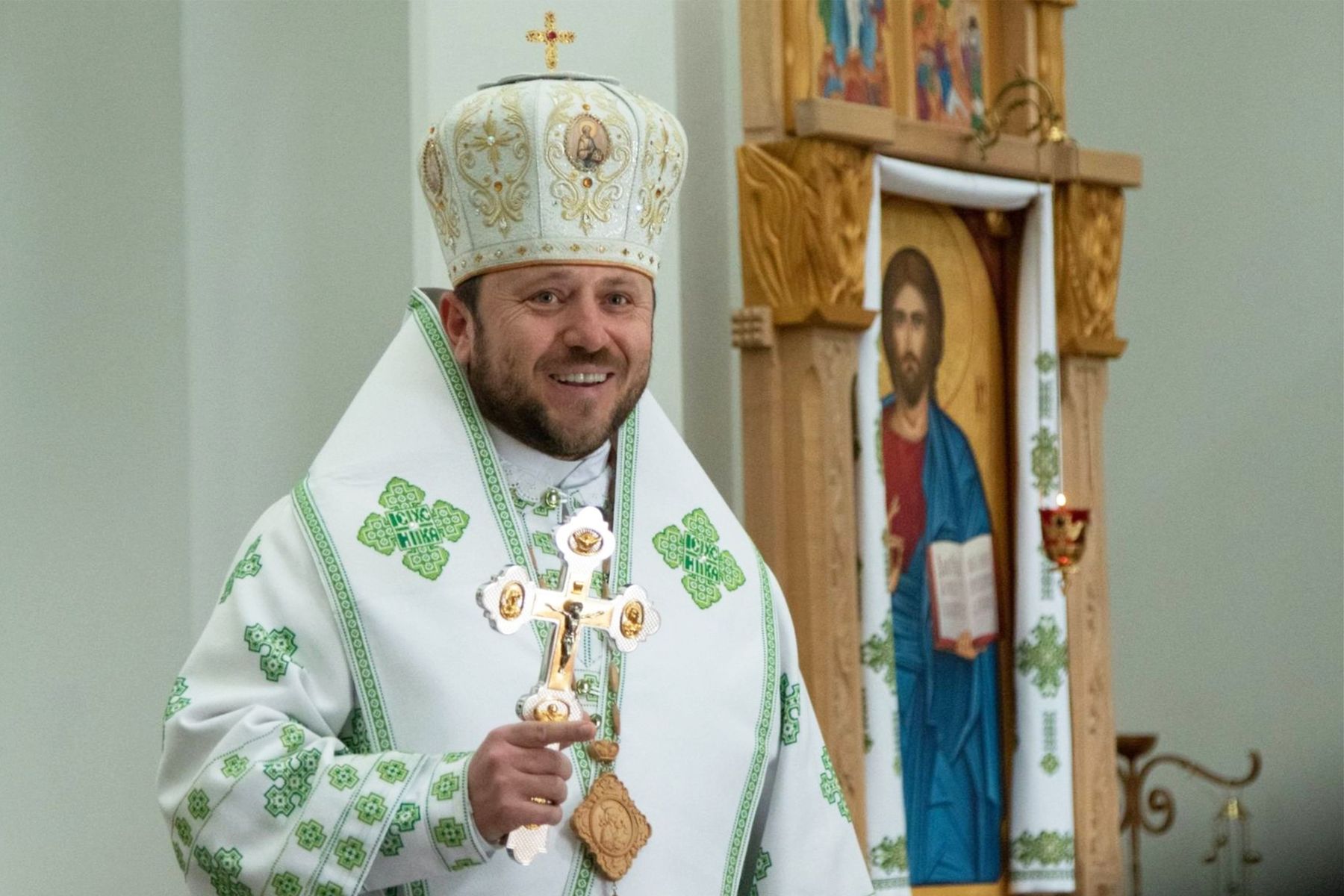
У Марійському духовному центрі «Зарваниця» вперше упродовж 2–12 липня 2024 року відбувся Синод Єпископів Української Греко-Католицької Церкви. Єпископи з цілого світу з’їхалися в Україну на спільну зустріч, щоб обговорити актуальні виклики душпастирства у кожному із регіонів, де присутні вірні Української Греко-Католицької Церкви, та виробити ефективні відповіді на зранення українського народу, породжені жорстокою і несправедливою російською війною.

Відбувся Синод Єпископів УГКЦ 2024 року: що варто знати?

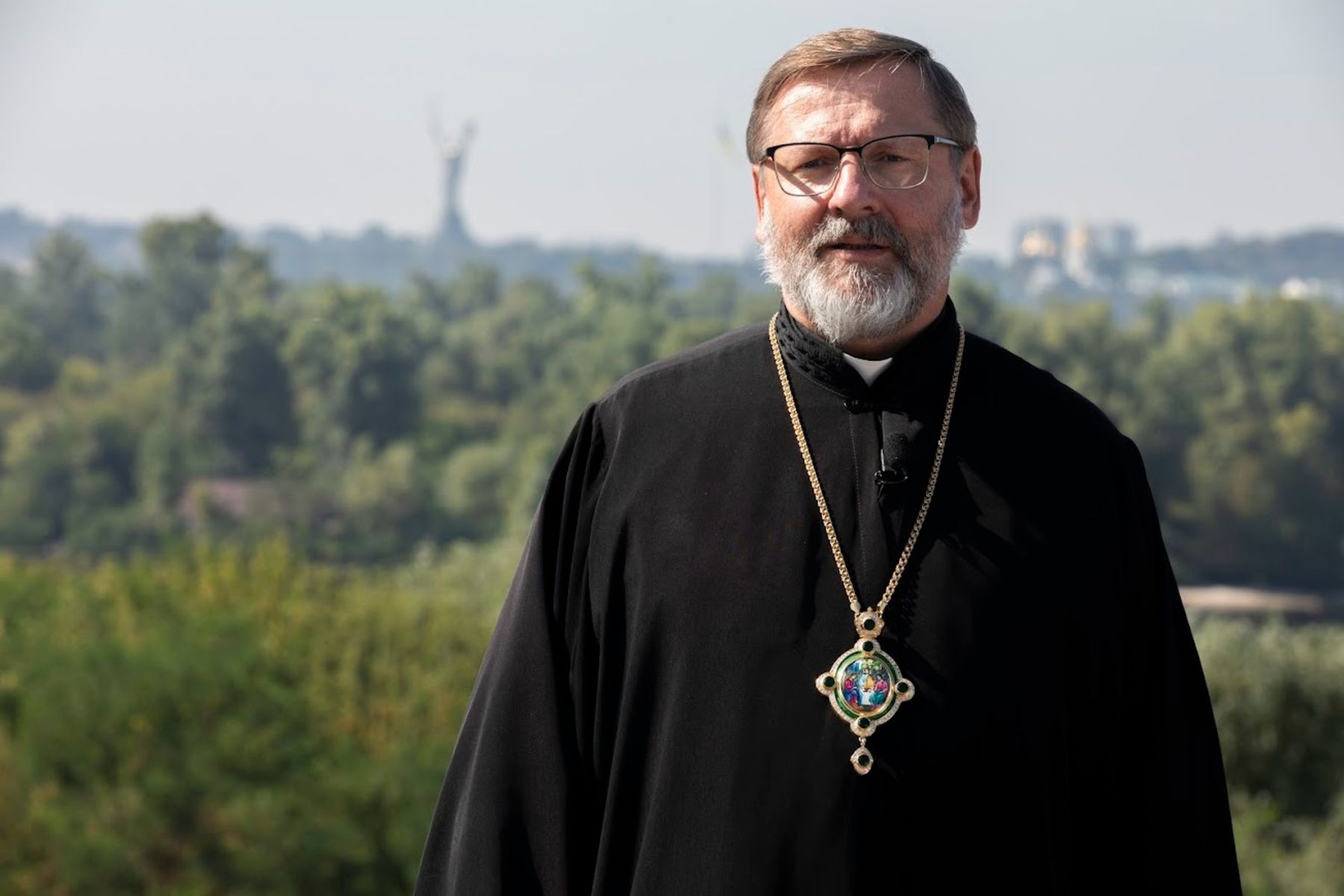
«Це дуже особливий і символічний Синод. Коли розпочалася широкомасштабна війна, ми зібрали наш Синод у Перемишлі. Минулого року ми мали наш Синод у Римі, щоби промовити в імені України до Святішого Отця та усього світу з Петрової столиці. Цього разу владики приїхали до України, до Зарваниці для того, щоби не просто подумати як служити Церкві і народові, але й для того, щоби промовити до нашого народу словом надії. Тому я називаю цей Синод вкотре Синодом надії для України і в Україні. Його особливістю є те, що вперше в історії нашої Церкви такий Синод відбувається у Зарваниці. Разом із митрополитом Василієм ми собі пригадували, як Зарваниця виглядала у 1988 році, коли підпільна Церква святкувала 1000-ліття Хрещення України. Тут нічого не було. Ліс, джерело і маленька напівзруйнована церква. А сьогодні тут стоїть величавий національний Марійський центр. Ми віднайшли оригінал чудотворної ікони. І вперше маємо сьогодні можливість провести Синод Єпископів у домі Марії», — мовив Отець і Глава Української Греко-Католицької Церкви Блаженніший Святослав на початку цьогорічних синодальних засідань.https://www.youtube.com/embed/uN5sNVzYobc?rel=0&showinfo=0

По завершенні робочих засідань Синоду Єпископів УГКЦ разом аналізуємо його перебіг та основні події. Що варто знати про цьогорічний Синод?

Що таке Синод Єпископів УГКЦ?

Найвищу владу в Українській Греко-Католицькій Церкві здійснює Синод Єпископів УГКЦ разом з Отцем і Главою УГКЦ. Своїм служінням він відображає єдність та спільність усієї Церкви. Будучи законодавчим органом, єдиним компетентним видавати закони для усієї Церкви, Синод приймає закони, необхідні для належного душпастирства та порядку в Українській Греко-Католицькій Церкві. Здійснюючи судову владу із збереженням компетенції Апостольського Престолу та приписів кан. 1060 ККСЦ, він виступає як найвищий трибунал УГКЦ. Водночас, будучи найвищим душпастирським органом, члени Синоду Єпископів УГКЦ аналізують актуальні виклики перед Церквою, досліджують стан справ на загальноцерковному, єпархіальному і парафіяльному рівнях та запускають душпастирські програми та ініціативи задля ефективного проголошення Доброї Новини.

Синод Єпископів на чолі з Отцем і Главою Церкви канонічно представляє УГКЦ, провадить її, чуваючи над її місією у світі.

Які завдання належать до компетенції Синоду Єпископів УГКЦ?

До компетенції Синоду Єпископів належить:

  • дбати про душпастирське служіння та місійну діяльність усієї УГКЦ;
  • видавати закони для УГКЦ;
  • бути залученим до управління УГКЦ, даючи поради чи згоду згідно з нормами загального права;
  • вершити правосуддя, будучи найвищим трибуналом;
  • вибирати Отця і Главу Церкви;
  • вибирати єпископів та інших кандидатів на уряди;
  • приймати зречення Отця і Глави Церкви.

Хто є членами Синоду Єпископів УГКЦ?

Членами Синоду Єпископів є всі висвячені єпископи Української Греко-Католицької Церкви: єпархіальні, титулярні чи емерити, хоч би де вони були поставлені. Сьогодні це 58 осіб.

Також для участі у Синоді Отець і Глава УГКЦ може запросити адміністратора єпархії, який не є єпископом, інших єпископів чи ієрархів, та експертів. У такому випадку єпископи, ієрархи та адміністратори єпархії наділені правом дорадчого голосу. Натомість експерти не мають такого голосу і можуть бути присутні на засіданнях Синоду тільки під час своїх доповідей і відповідних дискусій.

Участь у цьогорічних засідань Синоду взяли 50 єпископів Української Греко-Католицької Церкви з України, Центральної і Західної Європи, Північної Америки і Південної Америки, Австралії. Двоє єпископів брали участь у Синоді вперше — владика Михайло Квятковський, єпископ Нью-Вестмінстерської єпархії, єпископська хіротонія якого відбулася 8 листопада 2023 року, та владика Михайло Смолінський, єпископ Саскатунської єпархії, хіротонія якого відбулася 20 січня 2024 року.

Говорячи про вік, то найстаршим єпископом на цьогорічних засіданнях став владика Петро Крик, єпископ-емерит, якому виповнилося 79 років, а наймолодшим — владика Микола Семенишин, єпископ-помічник Івано-Франківської архиєпархії УГКЦ, якому 29 травня виповнилося 42 роки. Натомість за єпископськими свяченнями найстаршим став владика Іриней Білик, канонік Папської базиліки Санта Марія Маджоре, із 35-ма роками єпископства, а наймолодшим — владика Михайло Смолінський, який ще навіть не відзначив першої річниці.

Як часто і куди скликається Синод Єпископів УГКЦ?

Традиційно, Синод Єпископів УГКЦ скликається щорічно. Це дозволяє єпископам у різних точках світу діяти злагоджено й одностайно.

Місце проведення Синоду обирається заздалегідь. Зазвичай, це здійснюється на попередньому Синоді. У цьому випадку беруться до уваги пристосованість місця для проведення такої зустрічі, логістика, забезпечення дискретності засідань та загальноцерковні потреби.

Цьогоріч Синод Єпископів УГКЦ відбувався вперше у Марійському духовному центрі «Зарваниця» упродовж 2–12 липня 2024 року.

Які основні теми обговорюються під час засідань Синоду?

Перш за все, кожен Синод Єпископів УГКЦ означений Головною темою, яка також обирається на попередньому. Головною темою Синоду Єпископів УГКЦ 2024 року, відповідно до Постанов Синоду Єпископів УГКЦ 2023 року, була: «„Бути благовісниками надії: євангелізація в контексті війни“. Відповідальним за підготування було визначено владику Йосафата Мощича, єпископа Чернівецької єпархії та Голову Ради у справах євангелізації при Главі УГКЦ.

Окрім цього, програма Синоду Єпископів складається із таких сталих розділів:

  • Вступні дії: Молебень до Святого Духа, присяга всіх осіб, які допомагають у проведенні Синоду, присяга членів Синоду, перенесення книги Святого Євангелія з каплиці до залу засідань;
  • Відкриття засідань молитвою «Царю Небесний» і вступні формальності, до яких належить: затвердження виправдання відсутності єпископів, перевірка присутності, ствердження наявності кворуму для правосильності Синоду та проголошення офіційного відкриття засідань Синоду;
  • Перевірка стану виконання рішень і законів попереднього Синоду Єпископів;
  • Програмна доповідь Отця і Глави Церкви;
  • Головна тема Синоду Єпископів;
  • Вибори єпископів;
  • Звіти про діяльність Курії Отця і Глави УГКЦ, а також її окремих підрозділів;
  • Літургійні питання;
  • Соціальне служіння УГКЦ;
  • Кадрові питання;
  • Канонічні питання;
  • Економічні питання;
  • Інші теми Синоду Єпископів;
  • Різні пропозиції і теми, які узгоджуються на першому робочому засіданні;
  • Повідомлення, які подаються в збірнику робочих документів до відома членів Синоду.

Яким чином організоване молитовне життя членів Синоду Єпископів УГКЦ?

Окрім робочих засідань та обговорень, які відбуваються в активному та уважному слуханні Святого Духа, важливою частиною кожного Синоду Єпископів УГКЦ є молитва. Як ми вже зазначили, кожне робоче засідання розпочинається із молитви «Царю Небесний» та завершується молитвою до Пресвятої Богородиці. Окрім того, щоденно вранці єпископи зустрічаються на спільній Божественній Літургії, в обід — на молитві Часу, а ввечері — на Вечірні. Один день кожного року відведений для духовної віднови. Зазвичай для проповіді Слова Божого обирається духівник, який звертається до учасників богослужінь під час Божественної Літургії та провадить День духовної віднови.

Цьогоріч проповідником Синоду Єпископів став о. Роман Терлецький, священник Івано-Франківської архиєпархії УГКЦ, медичний капелан Івано-Франківської центральної міської клінічної лікарні.

Натомість провідником Дня духовної віднови став один із доповідачів із Головної теми кардинал Гжегож Рись, архиєпископ і митрополит Лодзьський. Єпископ водночас є відомим католицьким проповідником і реколектантом, автором понад десятка книг.

Хто цьогоріч відвідав синодальні засідання із гостей?

У перший день засідань Синоду Єпископів УГКЦ до Зарваниці прибув Апостольський Нунцій в Україні архиєпископ Вісвальдас Кульбокас.

Також серед гостей Синоду у перший день були: владика Італо Дель’Оро, єпископ-помічник Галвестон-Хюстонської єпархії в штаті Техас (США), владика Герман Глеттер, єпарх дієцезії Інсбрука з Австрійської єпископської конференції, о. монс. Йосеф Марамредді, аташе Апостольської Нунціатури в Україні, отець Теодор Мацапула, єпископ-номінант Мукачівської греко-католицької єпархії, владика Ніл Лущак, апостольський адміністратор Мукачівської греко-католицької єпархії, та о. Юрій Коласа, Генеральний вікарій Віденського Архиєпископа для вірних східних Католицьких Церков у Австрії.

За декілька днів після цього також прибув до Зарваниці архиєпископ і митрополит Пряшівський владика Йона Максім.

Якими є підсумки засідань Синоду Єпископів УГКЦ?

Відповідно до Статуту Синоду Єпископів УГКЦ, він офіційно завершується перенесенням Євангелія до каплиці, подячною молитвою, проголошенням Отцем і Главою УГКЦ закінчення синодальних засідань та підписанням синодальних рішень усіма членами Синоду.

Для належного інформування людей про перебіг та напрацювання Синоду Єпископів після його закінчення видається Комунікат Синоду, затверджений Отцем і Главою УГКЦ.

Ще одним важливим документом на завершення засідань є Постанови Синоду Єпископів УГКЦ, які подають практичні завдання та рекомендації для духовенства та вірних цілої Церкви.

Нерідко після засідань єпископи звертаються до вірних Церкви та усіх людей доброї волі із Посинодальним посланням, присвяченим Головній темі.Пресслужба Секретаріату Синоду Єпископів УГКЦ
Фото: Департамент інформації УГКЦ

Bull of Indiction of the Ordinary Jubilee of the Year 2025

SPES NON CONFUNDIT

BULL OF INDICTION
OF THE ORDINARY JUBILEE
OF THE YEAR 2025

FRANCIS
BISHOP OF ROME
SERVANT OF THE SERVANTS OF GOD

TO ALL WHO READ THIS LETTER
MAY HOPE FILL YOUR HEARTS

1. SPES NON CONFUNDIT. “Hope does not disappoint” (Rom 5:5). In the spirit of hope, the Apostle Paul addressed these words of encouragement to the Christian community of Rome. Hope is also the central message of the coming Jubilee that, in accordance with an ancient tradition, the Pope proclaims every twenty-five years. My thoughts turn to all those pilgrims of hope who will travel to Rome in order to experience the Holy Year and to all those others who, though unable to visit the City of the Apostles Peter and Paul, will celebrate it in their local Churches. For everyone, may the Jubilee be a moment of genuine, personal encounter with the Lord Jesus, the “door” (cf. Jn 10:7.9) of our salvation, whom the Church is charged to proclaim always, everywhere and to all as “our hope” (1 Tim 1:1).

Everyone knows what it is to hope. In the heart of each person, hope dwells as the desire and expectation of good things to come, despite our not knowing what the future may bring. Even so, uncertainty about the future may at times give rise to conflicting feelings, ranging from confident trust to apprehensiveness, from serenity to anxiety, from firm conviction to hesitation and doubt. Often we come across people who are discouraged, pessimistic and cynical about the future, as if nothing could possibly bring them happiness. For all of us, may the Jubilee be an opportunity to be renewed in hope. God’s word helps us find reasons for that hope. Taking it as our guide, let us return to the message that the Apostle Paul wished to communicate to the Christians of Rome.

A word of hope

2. “Since we are justified through faith, we have peace with God through our Lord Jesus Christ, through whom we have obtained access to this grace in which we stand; and we boast in our hope of sharing in the glory of God… Hope does not disappoint, because God’s love has been poured into our hearts through the Holy Spirit that has been given to us” (Rom 5:1-2.5). In this passage, Saint Paul gives us much to reflect upon. We know that the Letter to the Romans marked a decisive turning point in his work of evangelization. Until then, he had carried out his activity in the eastern part of the Empire, but now he turns to Rome and all that Rome meant in the eyes of the world. Before him lay a great challenge, which he took up for the sake of preaching the Gospel, which knows no barriers or confines. The Church of Rome was not founded by Paul, yet he felt impelled to hasten there in order to bring to everyone the Gospel of Jesus Christ, crucified and risen from the dead, a message of hope that fulfils the ancient promises, leads to glory and, grounded in love, does not disappoint.

3. Hope is born of love and based on the love springing from the pierced heart of Jesus upon the cross: “For if while we were enemies, we were reconciled to God through the death of his Son, much more surely, having been reconciled, will we be saved by his life” (Rom 5:19). That life becomes manifest in our own life of faith, which begins with Baptism, develops in openness to God’s grace and is enlivened by a hope constantly renewed and confirmed by the working of the Holy Spirit.

By his perennial presence in the life of the pilgrim Church, the Holy Spirit illumines all believers with the light of hope. He keeps that light burning, like an ever-burning lamp, to sustain and invigorate our lives. Christian hope does not deceive or disappoint because it is grounded in the certainty that nothing and no one may ever separate us from God’s love: “Who will separate us from the love of Christ? Hardship, or distress, or persecution, or famine, or nakedness, or peril or the sword? No, in all these things we are more than conquerors through him who loved us. For I am convinced that neither death, nor life, nor angels, nor rulers, nor things present, nor things to come, nor powers, nor height, nor depth, nor anything else in all creation, will be able to separate us from the love of God in Christ Jesus our Lord” ( Rom 8:35.37-39). Here we see the reason why this hope perseveres in the midst of trials: founded on faith and nurtured by charity, it enables us to press forward in life. As Saint Augustine observes: “Whatever our state of life, we cannot live without these three dispositions of the soul, namely, to believe, to hope and to love”.

4. Saint Paul is a realist. He knows that life has its joys and sorrows, that love is tested amid trials, and that hope can falter in the face of suffering. Even so, he can write: “We boast in our sufferings, knowing that suffering produces endurance, and endurance produces character, and character produces hope” (Rom 5:3-4). For the Apostle, trials and tribulations mark the lives of those who preach the Gospel amid incomprehension and persecution (cf. 2 Cor 6:3-10). Yet in those very contexts, beyond the darkness we glimpse a light: we come to realize that evangelization is sustained by the power flowing from Christ’s cross and resurrection. In this way, we learn to practise a virtue closely linked to hope, namely patience. In our fast-paced world, we are used to wanting everything now. We no longer have time simply to be with others; even families find it hard to get together and enjoy one another’s company. Patience has been put to flight by frenetic haste, and this has proved detrimental, since it leads to impatience, anxiety and even gratuitous violence, resulting in more unhappiness and self-centredness.

Nor is there much place for patience in this age of the Internet, as space and time yield to an ever-present “now”. Were we still able to contemplate creation with a sense of awe, we might better understand the importance of patience. We could appreciate the changes of the seasons and their harvests, observe the life of animals and their cycles of growth, and enjoy the clarity of vision of Saint Francis. In his Canticle of the Creatures, written exactly eight hundred years ago, Francis saw all creation as a great family and could call the sun his “brother” and the moon his “sister”. A renewed appreciation of the value of patience could only prove beneficial for ourselves and for others. Saint Paul often speaks of patience in the context of our need for perseverance and confident trust in God’s promises. Yet, before all else, he testifies to God’s own patience, as “the God of all patience and encouragement” ( Rom 15:5). Patience, one of the fruits of the Holy Spirit, sustains our hope and strengthens it as a virtue and a way of life. May we learn to pray frequently for the grace of patience, which is both the daughter of hope and at the same time its firm foundation.

A journey of hope

5. This interplay of hope and patience makes us see clearly that the Christian life is a journey calling for moments of greater intensity to encourage and sustain hope as the constant companion that guides our steps towards the goal of our encounter with the Lord Jesus. I like to think that the proclamation of the first Jubilee, in the year 1300, was preceded by a journey of grace inspired by popular spirituality. How can we fail to recall the various ways by which the grace of forgiveness had been poured out upon God’s holy and faithful People? We are reminded, for example, of the great “Pardon” that Saint Celestine V granted to all those who visited the Basilica of Santa Maria di Collemaggio in Aquila on the 28th and 29th days of August 1294, six years before Pope Boniface VIII instituted the Holy Year. The Church was already experiencing the grace of the Jubilee as an outpouring of divine mercy. Even earlier, in 1216, Pope Honorius III granted the plea of Saint Francis for an indulgence for all those visiting the Porziuncola on the first two days of August. The same can be said of the pilgrimage to Santiago de Compostela: in 1222, Pope Callistus II allowed the Jubilee to be celebrated there whenever the Feast of the Apostle James fell on a Sunday. It is good that such “dispersed” celebrations of the Jubilee continue, so that the power of God’s forgiveness can support and accompany communities and individuals on their pilgrim way.

Pilgrimage is of course a fundamental element of every Jubilee event. Setting out on a journey is traditionally associated with our human quest for meaning in life. A pilgrimage on foot is a great aid for rediscovering the value of silence, effort and simplicity of life. In the coming year, pilgrims of hope will surely travel the ancient and more modern routes in order to experience the Jubilee to the full. In Rome itself, along with the usual visits to the catacombs and the Seven Churches, other itineraries of faith will be proposed. Journeying from one country to another as if borders no longer mattered, and passing from one city to another in contemplating the beauty of creation and masterpieces of art, we learn to treasure the richness of different experiences and cultures, and are inspired to lift up that beauty, in prayer, to God, in thanksgiving for his wondrous works. The Jubilee Churches along the pilgrimage routes and in the city of Rome can serve as oases of spirituality and places of rest on the pilgrimage of faith, where we can drink from the wellsprings of hope, above all by approaching the sacrament of Reconciliation, the essential starting-point of any true journey of conversion. In the particular Churches, special care should be taken to prepare priests and the faithful to celebrate the sacrament of Confession and to make it readily available in its individual form.

In a particular way, I would like to invite the faithful of the Eastern Churches, particularly those already in full communion with the Successor of Peter, to take part in this pilgrimage. They have suffered greatly, often even unto death, for their fidelity to Christ and the Church, and so they should feel themselves especially welcome in this City of Rome that is also their Mother and cherishes so many memories of their presence. The Catholic Church, enriched by their ancient liturgies and the theology and spirituality of their Fathers, monks and theologians, wants to give symbolic expression to its embrace of them and their Orthodox brothers and sisters in these times when they endure their own Way of the Cross, often forced by violence and instability to leave their homelands, their holy lands, for safer places. For them, the hope born of the knowledge that they are loved by the Church, which does not abandon them but follows them wherever they go, will make the symbolism of the Jubilee all the more powerful.

6. The Holy Year of 2025 is itself in continuity with preceding celebrations of grace. In the last Ordinary Jubilee, we crossed the threshold of two millennia from the birth of Jesus Christ. Then, on 13 March 2015, I proclaimed an Extraordinary Jubilee for the sake of making known and encouraging an encounter with the “merciful face of God”, the core message of the Gospel for every man and woman of every time and place. Now the time has come for a new Jubilee, when once more the Holy Door will be flung open to invite everyone to an intense experience of the love of God that awakens in hearts the sure hope of salvation in Christ. The Holy Year will also guide our steps towards yet another fundamental celebration for all Christians: 2033 will mark the two thousandth anniversary of the redemption won by the passion, death and resurrection of the Lord Jesus. We are about to make a pilgrimage marked by great events, in which the grace of God precedes and accompanies his people as they press forward firm in faith, active in charity and steadfast in hope (cf. 1 Thess 1:3) .

Sustained by this great tradition, and certain that the Jubilee Year will be for the entire Church a lively experience of grace and hope, I hereby decree that the Holy Door of the Basilica of Saint Peter in the Vatican will be opened on 24 December 2024, thus inaugurating the Ordinary Jubilee. On the following Sunday, 29 December 2024, I will open the Holy Door of my cathedral, Saint John Lateran, which on 9 November this year will celebrate the 1700th anniversary of its dedication. Then, on 1 January 2025, the Solemnity of Mary, Mother of God, the Holy Door of the Papal Basilica of Saint Mary Major will be opened. Finally, Sunday, 5 January 2025, will mark the opening of the Holy Door of the Papal Basilica of Saint Paul Outside the Walls. These last three Holy Doors will be closed on Sunday, 28 December 2025.

I further decree that on Sunday, 29 December 2024, in every cathedral and co-cathedral, diocesan bishops are to celebrate Holy Mass as the solemn opening of the Jubilee Year, using the ritual indications that will be provided for that occasion. For celebrations in co-cathedrals, the bishop’s place can be taken by a suitably designated delegate. A pilgrimage that sets out from a church chosen for the collectio and then proceeds to the cathedral can serve to symbolize the journey of hope that, illumined by the word of God, unites all the faithful. In the course of this pilgrimage, passages from the present Document can be read, along with the announcement of the Jubilee Indulgence to be gained in accordance with the prescriptions found in the ritual indications mentioned above. The Holy Year will conclude in the particular Churches on Sunday, 28 December 2025; in the course of the year, every effort should be made to enable the People of God to participate fully in its proclamation of hope in God’s grace and in the signs that attest to its efficacy.

The Ordinary Jubilee will conclude with the closing of the Holy Door in the Papal Basilica of Saint Peter in the Vatican on 6 January 2026, the Solemnity of the Epiphany of the Lord. During the Holy Year, may the light of Christian hope illumine every man and woman, as a message of God’s love addressed to all! And may the Church bear faithful witness to this message in every part of the world!

Signs of hope

7. In addition to finding hope in God’s grace, we are also called to discover hope in the signs of the times that the Lord gives us. As the Second Vatican Council observed: “In every age, the Church has the responsibility of reading the signs of the times and interpreting them in the light of the Gospel. In this way, in language adapted to every generation, she can respond to people’s persistent questions about the meaning of this present life and of the life to come, and how one is related to the other”. We need to recognize the immense goodness present in our world, lest we be tempted to think ourselves overwhelmed by evil and violence. The signs of the times, which include the yearning of human hearts in need of God’s saving presence, ought to become signs of hope.

8. The first sign of hope should be the desire for peace in our world, which once more finds itself immersed in the tragedy of war. Heedless of the horrors of the past, humanity is confronting yet another ordeal, as many peoples are prey to brutality and violence. What does the future hold for those peoples, who have already endured so much? How is it possible that their desperate plea for help is not motivating world leaders to resolve the numerous regional conflicts in view of their possible consequences at the global level? Is it too much to dream that arms can fall silent and cease to rain down destruction and death? May the Jubilee remind us that those who are peacemakers will be called “children of God” (Mt 5:9). The need for peace challenges us all, and demands that concrete steps be taken. May diplomacy be tireless in its commitment to seek, with courage and creativity, every opportunity to undertake negotiations aimed at a lasting peace.

9. Looking to the future with hope also entails having enthusiasm for life and a readiness to share it. Sadly, in many situations this is lacking. A first effect of this is the loss of the desire to transmit life. A number of countries are experiencing an alarming decline in the birthrate as a result of today’s frenetic pace, fears about the future, the lack of job security and adequate social policies, and social models whose agenda is dictated by the quest for profit rather than concern for relationships. In certain quarters, the tendency “to blame population growth, instead of extreme and selective consumerism on the part of some, is one way of refusing to face the [real] issues”.

Openness to life and responsible parenthood is the design that the Creator has implanted in the hearts and bodies of men and women, a mission that the Lord has entrusted to spouses and to their love. It is urgent that responsible legislation on the part of states be accompanied by the firm support of communities of believers and the entire civil community in all its components. For the desire of young people to give birth to new sons and daughters as a sign of the fruitfulness of their love ensures a future for every society. This is a matter of hope: it is born of hope and it generates hope.

Consequently, the Christian community should be at the forefront in pointing out the need for a social covenant to support and foster hope, one that is inclusive and not ideological, working for a future filled with the laughter of babies and children, in order to fill the empty cradles in so many parts of our world. All of us, however, need to recover the joy of living, since men and women, created in the image and likeness of God (cf. Gen 1:26), cannot rest content with getting along one day at a time, settling for the here and now and seeking fulfilment in material realities alone. This leads to a narrow individualism and the loss of hope; it gives rise to a sadness that lodges in the heart and brings forth fruits of discontent and intolerance.

10. During the Holy Year, we are called to be tangible signs of hope for those of our brothers and sisters who experience hardships of any kind. I think of prisoners who, deprived of their freedom, daily feel the harshness of detention and its restrictions, lack of affection and, in more than a few cases, lack of respect for their persons. I propose that in this Jubilee Year governments undertake initiatives aimed at restoring hope; forms of amnesty or pardon meant to help individuals regain confidence in themselves and in society; and programmes of reintegration in the community, including a concrete commitment to respect for law.

This is an ancient appeal, one drawn from the word of God, whose wisdom remains ever timely. It calls for acts of clemency and liberation that enable new beginnings: “You shall hallow the fiftieth year and you shall proclaim liberty throughout the land to all its inhabitants” ( Lev 25:10). This institution of the Mosaic law was later taken up by the prophet Isaiah: “The Lord has sent me to bring good news to the oppressed, to bind up the brokenhearted, to proclaim liberty to the captives and release to the prisoners, to proclaim the year of the Lord’s favour” ( Is 61:1-2). Jesus made those words his own at the beginning of his ministry, presenting himself as the fulfilment of the “year of the Lord’s favour” (cf. Lk 4:18-19). In every part of the world, believers, and their Pastors in particular, should be one in demanding dignified conditions for those in prison, respect for their human rights and above all the abolition of the death penalty, a provision at odds with Christian faith and one that eliminates all hope of forgiveness and rehabilitation. In order to offer prisoners a concrete sign of closeness, I would myself like to open a Holy Door in a prison, as a sign inviting prisoners to look to the future with hope and a renewed sense of confidence.

11. Signs of hope should also be shown to the sick, at home or in hospital. Their sufferings can be allayed by the closeness and affection of those who visit them. Works of mercy are also works of hope that give rise to immense gratitude. Gratitude should likewise be shown to all those healthcare workers who, often in precarious conditions, carry out their mission with constant care and concern for the sick and for those who are most vulnerable.

Inclusive attention should also be given to all those in particularly difficult situations, who experience their own weaknesses and limitations, especially those affected by illnesses or disabilities that severely restrict their personal independence and freedom. Care given to them is a hymn to human dignity, a song of hope that calls for the choral participation of society as a whole.

12. Signs of hope are also needed by those who are the very embodiment of hope, namely, the young. Sadly, they often see their dreams and aspirations frustrated. We must not disappoint them, for the future depends on their enthusiasm. It is gratifying to see the energy they demonstrate, for example, by rolling up their sleeves and volunteering to help when disasters strike and people are in need. Yet it is sad to see young people who are without hope, who face an uncertain and unpromising future, who lack employment or job security, or realistic prospects after finishing school. Without the hope that their dreams can come true, they will inevitably grow discouraged and listless. Escaping into drugs, risk-taking and the pursuit of momentary pleasure does greater harm to them in particular, since it closes them to life’s beauty and richness, and can lead to depression and even self-destructive actions. For this reason, the Jubilee should inspire the Church to make greater efforts to reach out to them. With renewed passion, let us demonstrate care and concern for adolescents, students and young couples, the rising generation. Let us draw close to the young, for they are the joy and hope of the Church and of the world!

13. Signs of hope should also be present for migrants who leave their homelands behind in search of a better life for themselves and for their families. Their expectations must not be frustrated by prejudice and rejection. A spirit of welcome, which embraces everyone with respect for his or her dignity, should be accompanied by a sense of responsibility, lest anyone be denied the right to a dignified existence. Exiles, displaced persons and refugees, whom international tensions force to emigrate in order to avoid war, violence and discrimination, ought to be guaranteed security and access to employment and education, the means they need to find their place in a new social context.

May the Christian community always be prepared to defend the rights of those who are most vulnerable, opening wide its doors to welcome them, lest anyone ever be robbed of the hope of a better future. May the Lord’s words in the great parable of the Last Judgement always find an echo in our hearts: “I was a stranger and you welcomed me” for “just as you did it to one of the least of these my brothers and sisters, you did it to me” (Mt 25:35.40).

14. The elderly, who frequently feel lonely and abandoned, also deserve signs of hope. Esteem for the treasure that they are, their life experiences, their accumulated wisdom and the contribution that they can still make, is incumbent on the Christian community and civil society, which are called to cooperate in strengthening the covenant between generations.

Here I would also mention grandparents, who represent the passing on of faith and wisdom to the younger generation. May they find support in the gratitude of their children and the love of their grandchildren, who discover in them their roots and a source of understanding and encouragement.

15. I ask with all my heart that hope be granted to the billions of the poor, who often lack the essentials of life. Before the constant tide of new forms of impoverishment, we can easily grow inured and resigned. Yet we must not close our eyes to the dramatic situations that we now encounter all around us, not only in certain parts of the world. Each day we meet people who are poor or impoverished; they may even be our next-door neighbours. Often they are homeless or lack sufficient food for the day. They suffer from exclusion and indifference on the part of many. It is scandalous that in a world possessed of immense resources, destined largely to producing weapons, the poor continue to be “the majority of the planet’s population, billions of people. These days they are mentioned in international political and economic discussions, but one often has the impression that their problems are brought up as an afterthought, a question which gets added almost out of duty or in a tangential way, if not treated merely as collateral damage. Indeed, when all is said and done, they frequently remain at the bottom of the pile”. Let us not forget: the poor are almost always the victims, not the ones to blame.

Appeals for hope

16. Echoing the age-old message of the prophets, the Jubilee reminds us that the goods of the earth are not destined for a privileged few, but for everyone. The rich must be generous and not avert their eyes from the faces of their brothers and sisters in need. Here I think especially of those who lack water and food: hunger is a scandal, an open wound on the body of our humanity, and it summons all of us to a serious examination of conscience. I renew my appeal that “with the money spent on weapons and other military expenditures, let us establish a global fund that can finally put an end to hunger and favour development in the most impoverished countries, so that their citizens will not resort to violent or illusory situations, or have to leave their countries in order to seek a more dignified life”.

Another heartfelt appeal that I would make in light of the coming Jubilee is directed to the more affluent nations. I ask that they acknowledge the gravity of so many of their past decisions and determine to forgive the debts of countries that will never be able to repay them. More than a question of generosity, this is a matter of justice. It is made all the more serious today by a new form of injustice which we increasingly recognize, namely, that “a true ‘ecological debt’ exists, particularly between the global North and South, connected to commercial imbalances with effects on the environment and the disproportionate use of natural resources by certain countries over long periods of time”. As sacred Scripture teaches, the earth is the Lord’s and all of us dwell in it as “aliens and tenants” ( Lev 25:23). If we really wish to prepare a path to peace in our world, let us commit ourselves to remedying the remote causes of injustice, settling unjust and unpayable debts, and feeding the hungry.

17. The coming Jubilee Year will also coincide with a significant date for all Christians, namely, the 1700th anniversary of the celebration of the first great Ecumenical Council, that of Nicaea. It is worth noting that, from apostolic times, bishops have gathered on various occasions in order to discuss doctrinal questions and disciplinary matters. In the first centuries of Christianity, synods frequently took place in both East and West, showing the importance of ensuring the unity of God’s People and the faithful proclamation of the Gospel. The Jubilee can serve as an important occasion for giving concrete expression to this form of synodality, which the Christian community today considers increasingly necessary for responding to the urgent need for evangelization. All the baptized, with their respective charisms and ministries, are co-responsible for ensuring that manifold signs of hope bear witness to God’s presence in the world.

The Council of Nicaea sought to preserve the Church’s unity, which was seriously threatened by the denial of the full divinity of Jesus Christ and hence his consubstantiality with the Father. Some three hundred bishops took part, convoked at the behest of the Emperor Constantine; their first meeting took place in the Imperial Palace on 20 May 325. After various debates, by the grace of the Spirit they unanimously approved the Creed that we still recite each Sunday at the celebration of the Eucharist. The Council Fathers chose to begin that Creed by using for the first time the expression “ We believe”, as a sign that all the Churches were in communion and that all Christians professed the same faith.

The Council of Nicaea was a milestone in the Church’s history. The celebration of its anniversary invites Christians to join in a hymn of praise and thanksgiving to the Blessed Trinity and in particular to Jesus Christ, the Son of God, “consubstantial with the Father”, who revealed to us that mystery of love. At the same time, Nicaea represents a summons to all Churches and Ecclesial Communities to persevere on the path to visible unity and in the quest of fitting ways to respond fully to the prayer of Jesus “that they may all be one. As you, Father, are in me and I am in you, may they also be in us, so that the world may believe that you have sent me” ( Jn 17:21).

The Council of Nicaea also discussed the date of Easter. To this day, different approaches to this question prevent celebrating the fundamental event of our faith on the same day. Providentially, a common celebration will take place in the year 2025. May this serve as an appeal to all Christians, East and West, to take a decisive step forward towards unity around a common date for Easter. We do well to remind ourselves that many people, unaware of the controversies of the past, fail to understand how divisions in this regard can continue to exist.

Anchored in hope

18. Hope, together with faith and charity, makes up the triptych of the “theological virtues” that express the heart of the Christian life (cf. 1 Cor 13:13; 1 Thess 1:3). In their inseparable unity, hope is the virtue that, so to speak, gives inward direction and purpose to the life of believers. For this reason, the Apostle Paul encourages us to “rejoice in hope, be patient in suffering, and persevere in prayer” (Rom 12:12). Surely we need to “abound in hope” (cf. Rom 15:13), so that we may bear credible and attractive witness to the faith and love that dwell in our hearts; that our faith may be joyful and our charity enthusiastic; and that each of us may be able to offer a smile, a small gesture of friendship, a kind look, a ready ear, a good deed, in the knowledge that, in the Spirit of Jesus, these can become, for those who receive them, rich seeds of hope. Yet what is the basis of our hope? To understand this, let us stop and reflect on “the reasons for our hope” (cf. 1 Pet 3:15).

19. “I believe in life everlasting”. So our faith professes. Christian hope finds in these words an essential foundation. For hope is “that theological virtue by which we desire… eternal life as our happiness”. The Second Vatican Council says of hope that, “when people are deprived of this divine support, and lack hope in eternal life, their dignity is deeply impaired, as may so often be seen today. The problems of life and death, of guilt and suffering, remain unsolved, so that people are frequently thrown into despair”. We, however, by virtue of the hope in which we were saved, can view the passage of time with the certainty that the history of humanity and our own individual history are not doomed to a dead end or a dark abyss, but directed to an encounter with the Lord of glory. As a result, we live our lives in expectation of his return and in the hope of living forever in him. In this spirit, we make our own the heartfelt prayer of the first Christians with which sacred Scripture ends: “Come, Lord Jesus!” ( Rev 22:20).

20. The death and resurrection of Jesus is the heart of our faith and the basis of our hope. Saint Paul states this succinctly by the use of four verbs: “I handed on to you as of first importance what I in turn had received, that Christ died for our sins in accordance with the Scriptures, and that he was buried, and that he was raised on the third day in accordance with the Scriptures, and that he appeared to Cephas and then to the twelve” ( 1 Cor 15:3-5). Christ died, was buried, was raised and appeared. For our sake, Jesus experienced the drama of death. The Father’s love raised him in the power of the Spirit, and made of his humanity the first fruits of our eternal salvation. Christian hope consists precisely in this: that in facing death, which appears to be the end of everything, we have the certainty that, thanks to the grace of Christ imparted to us in Baptism, “life is changed, not ended”, forever. Buried with Christ in Baptism, we receive in his resurrection the gift of a new life that breaks down the walls of death, making it a passage to eternity.

The reality of death, as a painful separation from those dearest to us, cannot be mitigated by empty rhetoric. The Jubilee, however, offers us the opportunity to appreciate anew, and with immense gratitude, the gift of the new life that we have received in Baptism, a life capable of transfiguring death’s drama. It is worth reflecting, in the context of the Jubilee, on how that mystery has been understood from the earliest centuries of the Church’s life. An example would be the tradition of building baptismal fonts in the shape of an octagon, as seen in many ancient baptisteries, like that of Saint John Lateran in Rome. This was intended to symbolize that Baptism is the dawn of the “eighth day”, the day of the resurrection, a day that transcends the normal, weekly passage of time, opening it to the dimension of eternity and to life everlasting: the goal to which we tend on our earthly pilgrimage (cf. Rom 6:22).

The most convincing testimony to this hope is provided by the martyrs. Steadfast in their faith in the risen Christ, they renounced life itself here below, rather than betray their Lord. Martyrs, as confessors of the life that knows no end, are present and numerous in every age, and perhaps even more so in our own day. We need to treasure their testimony, in order to confirm our hope and allow it to bear good fruit.

The martyrs, coming as they do from different Christian traditions, are also seeds of unity, expressions of the ecumenism of blood. I greatly hope that the Jubilee will also include ecumenical celebrations as a way of highlighting the richness of the testimony of these martyrs.

21. What, then, will become of us after death? With Jesus, beyond this threshold we will find eternal life, consisting in full communion with God as we forever contemplate and share in his infinite love. All that we now experience in hope, we shall then see in reality. We are reminded of the words of Saint Augustine: “When I am one with you in all my being, there will be no more pain and toil; my life shall be true life, a life wholly filled by you”. What will characterize this fullness of communion? Being happy. Happiness is our human vocation, a goal to which all aspire.

But what is happiness? What is the happiness that we await and desire? Not some fleeting pleasure, a momentary satisfaction that, once experienced, keeps us longing for more, in a desperate quest that leaves our hearts unsated and increasingly empty. We aspire to a happiness that is definitively found in the one thing that can bring us fulfilment, which is love. Thus, we will be able to say even now: I am loved, therefore I exist; and I will live forever in the love that does not disappoint, the love from which nothing can ever separate me. Let us listen once more to the words of the Apostle: “I am convinced that neither death, nor life, nor angels, nor rulers, nor things present, nor things to come, nor powers, nor height, nor depth, nor anything else in all creation, will be able to separate us from the love of God in Christ Jesus our Lord” (Rom 8:38-39).

22. Another reality having to do with eternal life is God’s judgement, both at the end of our individual lives and at the end of history. Artists have often attempted to portray it – here we can think of Michelangelo’s magnum opus in the Sistine Chapel – in accordance with the theological vision of their times and with the aim of inspiring a sense of awe in the viewer. We should indeed prepare ourselves consciously and soberly for the moment when our lives will be judged, but we must always do this from the standpoint of hope, the theological virtue that sustains our lives and shields them from groundless fear. The judgement of God, who is love (cf. 1 Jn 4:8.16), will surely be based on love, and in particular on all that we have done or failed to do with regard to those in need, in whose midst Christ, the Judge himself, is present (cf. Mt 25:31-46). Clearly, then, we are speaking of a judgement unlike any handed down by human, earthly tribunals; it should be understood as a rapport of truth with the God who is love and with oneself, within the unfathomable mystery of divine mercy. Sacred Scripture states: “You have taught your people that the righteous must be kind, and you have filled your children with good hope, because you give repentance for sins, so that… when we are judged, we may expect mercy” ( Wis 12:19.22). In the words of Benedict XVI: “At the moment of judgement we experience and we absorb the overwhelming power of his love over all the evil in the world and in ourselves. The pain of love becomes our salvation and our joy”.

Judgement, then, concerns the salvation in which we hope and which Jesus has won for us by his death and resurrection. It is meant to bring us to a definitive encounter with the Lord. The evil we have done cannot remain hidden; it needs to be purified in order to enable this definitive encounter with God’s love. Here we begin to see the need of our prayers for all those who have ended their earthly pilgrimage, our solidarity in an intercession that is effective by virtue of the communion of the saints, and the shared bond that makes us one in Christ, the firstborn of all creation. The Jubilee indulgence, thanks to the power of prayer, is intended in a particular way for those who have gone before us, so that they may obtain full mercy.

23. Indeed, the indulgence is a way of discovering the unlimited nature of God’s mercy. Not by chance, for the ancients, the terms “mercy” and “indulgence” were interchangeable, as expressions of the fullness of God’s forgiveness, which knows no bounds.

The sacrament of Penance assures us that God wipes away our sins. We experience those powerful and comforting words of the Psalm: “It is he who forgives all your guilt, who heals every one of your ills, who redeems your life from the grave, who crowns you with love and compassion… The Lord is compassion and love, slow to anger and rich in mercy… He does not treat us according to our sins, nor repay us according to our faults. For as the heavens are high above the earth, so strong is his love for those who fear him. As far as the east is from the west, so far does he remove our sins” (Ps 103:3-4.8.10-12). The sacrament of Reconciliation is not only a magnificent spiritual gift, but also a decisive, essential and fundamental step on our journey of faith. There, we allow the Lord to erase our sins, to heal our hearts, to raise us up, to embrace us and to reveal to us his tender and compassionate countenance. There is no better way to know God than to let him reconcile us to himself (cf. 2 Cor 5:20) and savour his forgiveness. Let us not neglect Confession, but rediscover the beauty of this sacrament of healing and joy, the beauty of God’s forgiveness of our sins!

Still, as we know from personal experience, every sin “leaves its mark”. Sin has consequences, not only outwardly in the effects of the wrong we do, but also inwardly, inasmuch as “every sin, even venial, entails an unhealthy attachment to creatures, which must be purified either here on earth, or after death, in the state called Purgatory”. In our humanity, weak and attracted by evil, certain residual effects of sin remain. These are removed by the indulgence, always by the grace of Christ, who, as Saint Paul VI wrote, “is himself our ‘indulgence’”. The Apostolic Penitentiary will issue norms for obtaining and rendering spiritually fruitful the practice of the Jubilee indulgence.

This experience of full forgiveness cannot fail to open our hearts and minds to the need to forgive others in turn. Forgiveness does not change the past; it cannot change what happened in the past, yet it can allow us to change the future and to live different lives, free of anger, animosity and vindictiveness. Forgiveness makes possible a brighter future, which enables us to look at the past with different eyes, now more serene, albeit still bearing the trace of past tears.

For the last Extraordinary Jubilee, I commissioned Missionaries of Mercy, and these continue to carry out an important mission. During the coming Jubilee, may they exercise their ministry by reviving hope and offering forgiveness whenever a sinner comes to them with an open heart and a penitent spirit. May they remain a source of reconciliation and an encouragement to look to the future with heartfelt hope inspired by the Father’s mercy. I encourage bishops to take advantage of their precious ministry, especially by sending them wherever hope is sorely tested: to prisons, hospitals, and places where people’s dignity is violated, poverty abounds and social decay is prevalent. In this Jubilee Year, may no one be deprived of the opportunity to receive God’s forgiveness and consolation.

24. Hope finds its supreme witness in the Mother of God. In the Blessed Virgin, we see that hope is not naive optimism but a gift of grace amid the realities of life. Like every mother, whenever Mary looked at her Son, she thought of his future. Surely she kept pondering in her heart the words spoken to her in the Temple by the elderly Simeon: “This child is destined for the falling and rising of many in Israel, and to be a sign that will be opposed, so that the inner thoughts of many will be revealed – and a sword will pierce your own soul too” (Lk 2:34-35). At the foot of the cross, she witnessed the passion and death of Jesus, her innocent son. Overwhelmed with grief, she nonetheless renewed her “fiat”, never abandoning her hope and trust in God. In this way, Mary cooperated for our sake in the fulfilment of all that her Son had foretold in announcing that he would have to “undergo great suffering, and be rejected by the elders, the chief priests, and the scribes, and be killed, and after three days rise again” (Mk 8:31). In the travail of that sorrow, offered in love, Mary became our Mother, the Mother of Hope. It is not by chance that popular piety continues to invoke the Blessed Virgin as Stella Maris, a title that bespeaks the sure hope that, amid the tempests of this life, the Mother of God comes to our aid, sustains us and encourages us to persevere in hope and trust.

In this regard, I would note that the Shrine of Our Lady of Guadalupe in Mexico City is preparing to celebrate, in 2031, the fifth centenary of Our Lady’s first apparition. Through Juan Diego, the Mother of God brought a revolutionary message of hope that she continues to bring to every pilgrim and all the faithful: “Am I not here, who am your Mother?” That message continues to touch hearts in the many Marian shrines throughout the world, where countless pilgrims commend to the holy Mother of God their cares, their sorrows and their hopes. During the Jubilee Year, may these shrines be sacred places of welcome and privileged spaces for the rebirth of hope. I encourage all pilgrims to Rome to spend time in prayer in the Marian shrines of the City, in order to venerate the Blessed Mother and to implore her protection. I am confident that everyone, especially the suffering and those most in need, will come to know the closeness of Mary, the most affectionate of mothers, who never abandons her children and who, for the holy people of God, is “a sign of certain hope and comfort”.

25. In our journey towards the Jubilee, let us return to Scripture and realize that it speaks to us in these words: “May we who have taken refuge in him be strongly encouraged to seize the hope set before us. We have this hope, a sure and steadfast anchor of the soul, a hope that enters the inner shrine behind the curtain, where Jesus, a forerunner on our behalf, has entered” (Heb 6:18-20). Those words are a forceful encouragement for us never to lose the hope we have been given, to hold fast to that hope and to find in God our refuge and our strength.

The image of the anchor is eloquent; it helps us to recognize the stability and security that is ours amid the troubled waters of this life, provided we entrust ourselves to the Lord Jesus. The storms that buffet us will never prevail, for we are firmly anchored in the hope born of grace, which enables us to live in Christ and to overcome sin, fear and death. This hope, which transcends life’s fleeting pleasures and the achievement of our immediate goals, makes us rise above our trials and difficulties, and inspires us to keep pressing forward, never losing sight of the grandeur of the heavenly goal to which we have been called.

The coming Jubilee will thus be a Holy Year marked by the hope that does not fade, our hope in God. May it help us to recover the confident trust that we require, in the Church and in society, in our interpersonal relationships, in international relations, and in our task of promoting the dignity of all persons and respect for God’s gift of creation. May the witness of believers be for our world a leaven of authentic hope, a harbinger of new heavens and a new earth (cf. 2 Pet 3:13), where men and women will dwell in justice and harmony, in joyful expectation of the fulfilment of the Lord’s promises.

Let us even now be drawn to this hope! Through our witness, may hope spread to all those who anxiously seek it. May the way we live our lives say to them in so many words: “Hope in the Lord! Hold firm, take heart and hope in the Lord!” (Ps 27:14). May the power of hope fill our days, as we await with confidence the coming of the Lord Jesus Christ, to whom be praise and glory, now and forever.

Given in Rome, at Saint John Lateran, on 9 May, the Solemnity of the Ascension of our Lord Jesus Christ, in the year 2024, the twelfth of my Pontificate.


FRANCIS

Булла проголошення Звичайного ювілею 2025 року

SPES NON CONFUNDIT

Булла проголошення
       Звичайного ювілею
2025 року

ФРАНЦИСК,

ЄПИСКОП РИМА
СЛУГА СЛУГ БОЖИХ
УСІМ, ХТО ЧИТАЄ ЦЬОГО ЛИСТА,
ХАЙ НАДІЯ НАПОВНЮЄ СЕРЦЯ

1. «Spes non confundit» («Надія ж не засоромить») (Рим 5, 5). На знак надії апостол Павло вселяє відвагу у християнську спільноту Рима. Надія також є головним посланням майбутнього Ювілею, який за давньою традицією Папа проголошує що 25 років. Я думаю про всіх прочан надії, які прибудуть до Рима, щоб досвідчити там Святий рік, і про тих, хто, не маючи змоги прибути до міста апостолів Петра і Павла, святкуватиме його в помісних Церквах. Нехай для всіх він стане моментом живої та особистої зустрічі з Господом Ісусом, «дверима» спасіння (див. Ів 10, 7, 9), із Тим, кого Церква має місію звіщати завжди, скрізь і всім як «нашу надію» (1 Тим 1, 1).

Кожна людина має надію. У серці кожного живе надія як бажання та очікування добра, навіть якщо невідомо, що принесе прийдешній день. Непередбачуваність майбутнього, однак, породжує інколи суперечливі почуття: від довіри до страху, від спокою до зневіри, від впевненості до сумнівів. Ми часто зустрічаємо розчарованих людей, які дивляться в майбутнє зі скептицизмом і песимізмом, ніби ніщо не може принести їм щастя. Нехай же Ювілейний рік стане для всіх нагодою відродити надію. Боже слово допомагає нам віднайти причини для цього. Нехай нас спрямовує те, що писав апостол Павло до християн Риму.

Слово надії

2. «Оправдані ж вірою, ми маємо мир з Богом через Господа нашого Ісуса Христа, через якого ми вірою одержали доступ до тієї ласки, що в ній стоїмо і хвалимося надією на славу Божу. … Надія ж не засоромить, бо любов Бога влита в серця наші Святим Духом, що нам даний» (Рим 5, 1–2, 5). Є багато моментів для роздумів, які пропонує тут святий Павло. Ми знаємо, що Послання до римлян знаменує вирішальний крок у його євангелізаційній діяльності. Досі він здійснював її на сході імперії, а тепер на нього чекає Рим, з усім тим, що це місто представляє в очах світу: великий виклик, на який треба відповісти в ім’я проголошення Євангелія, що не знає перешкод і кордонів. Павло не заснував Римської Церкви, і він відчуває палке бажання якнайшвидше дістатися туди, щоб нести всім Євангеліє Ісуса Христа, померлого й воскреслого, як проголошення надії, яка виконує обітниці, вводить у славу і не розчаровує, бо основана на любові.

3. Адже надія народжується з любові і ґрунтується на любові, яка випливає із простромленого серця Ісуса на хресті: «Бо коли, бувши ворогами, ми примирилися з Богом смертю його Сина, то тим більше тепер, примирившися, спасемося його життям» (Рим 5, 10). І його життя виявляється в нашому житті віри, яке починається із Хрещення, розвивається в послуху Божій благодаті і тому надихається надією, яку завжди оновлює та робить непохитною діяння Святого Духа.

Насправді саме Святий Дух, із Його постійною присутністю на шляху Церкви, випромінює на віруючих світло надії: Він тримає його запаленим, мов смолоскип, який ніколи не згасає, даючи підтримку та наснагу нашому життю. І справді, християнська надія не обманює і не розчаровує, бо ґрунтується на впевненості, що ніщо й ніхто ніколи не зможе відлучити нас від Божественної любові: «Хто нас відлучить від Христової любови? Горе чи утиск, чи переслідування, чи голод, чи нагота, чи небезпека, чи меч? … Але в усьому цьому ми маємо повну перемогу завдяки тому, хто полюбив нас. Бо я певний, що ні смерть, ні життя, ні ангели, ні князівства, ні теперішнє, ні майбутнє, ні сили, ні висота, ні глибина, ані інше якесь створіння не зможе нас відлучити від Божої любови, що в Христі Ісусі, Господі нашім» (Рим 8, 35.37–39). Ось чому надія ця не відступає перед труднощами: вона ґрунтується на вірі й живиться милосердям, а отже, дає змогу рухатися вперед у житті. Святий Августин із цього приводу пише: «Яким би не було життя людини, але вона не живе без цих трьох схильностей душі: вірити, сподіватися, любити».

4. Погляд святого Павла дуже реалістичний. Він знає, що життя складається з радощів і печалей, що любов зазнає випробування, коли труднощі зростають і здається, що надія руйнується перед обличчям страждань. Проте пише: «Ми хвалимось і в утисках, знаючи, що утиск виробляє терпеливість, терпеливість – досвід, а досвід – надію» (Рим 5, 3–4). На думку апостола, скорбота і страждання є типовим станом тих, хто проголошує Євангеліє в умовах нерозуміння та переслідування (див. 2 Кор 6, 3–10). Але в таких ситуаціях крізь темряву прозирає світло: ми бачимо, як євангелізацію підтримує сила, що випливає із хреста і воскресіння Христа. А це веде до розвитку чесноти, тісно пов’язаної з надією, – терпеливості. Ми звикли хотіти всього і негайно, у світі, де поспіх став константою. Ми більше не маємо часу на зустрічі, часто навіть сім’ям важко зібратися разом і спокійно поговорити. Поспіх витіснив терпеливість, завдаючи людям великої шкоди. Гору беруть нетерплячість, нервозність, іноді безпричинна жорстокість, породжуючи незадоволення і замкнутість.

Ба більше, у добу інтернету, де замість простору та часу маємо «тут і тепер», для терпеливості нема місця. Якби ми ще могли споглядати творіння з подивуванням, то зрозуміли б, наскільки вирішальне значення має терпеливість. Чекати на зміну пір року з їхніми плодами; спостерігати за життям тварин і циклами їхнього розвитку; перейняти просте бачення святого Франциска, який у своїй «Пісні створінь», написаній рівно 800 років тому, сприймав створений світ як одну велику родину і називав сонце та місяць «братами». Відкрити для себе терпеливість дуже корисно як для нас самих, так і для інших. Святий Павло часто згадує терпеливість, щоб наголосити на важливості витривалості та довіри до того, що обіцяв нам Бог, але передовсім він твердить, що Бог довготерпеливий до нас, Він – «Бог терпеливости й утіхи» (Рим 15, 5). Терпеливість, яка також є плодом Святого Духа, підтримує надію і зміцнює її як чесноту та спосіб життя. Тому навчімося часто просити благодаті терпеливості, яка є дочкою надії і водночас підтримує її.

Шлях надії

5. З цього переплетення надії і терпеливості видно, що християнське життя – це шлях, який також потребує сильних моментів, щоб живити і зміцнювати надію, незамінну супутницю, яка дає змогу побачити мету – зустріч із Господом Ісусом. Мені подобається думати, що проголошенню в 1300 році першого Ювілею передував шлях благодаті, що надихався народною духовністю. Адже нам не можна забувати про різні форми, якими благодать прощення рясно виливалася на святий вірний Божий народ. Згадаймо, наприклад, велике «прощення», яке святий Целестин V надав тим, хто прийшов до базиліки Санта-Марія-ді-Коллемаджо в Аквілі 28 і 29 серпня 1294 року, за 6 років до того, як папа Боніфацій VIII запровадив Святий рік. Так, Церква вже мала досвід ювілейної благодаті милосердя. А ще раніше, у 1216 році, папа Гонорій ІІІ прийняв прохання святого Франциска про відпущення гріхів для тих, хто відвідає Порціункулу в перші два дні серпня. Те ж саме можна сказати і про паломництво до Сантьяго-де-Компостела: адже папа Калікст II 1122 року дозволив святкувати Ювілей у цій святині щоразу, коли свято апостола Якова припадало на неділю. Добре, що цей «поширений» спосіб святкування Ювілею триває далі, щоб сила Божого прощення підтримувала і супроводжувала шлях спільнот та окремих осіб.

Не випадково, фундаментальний елемент кожної ювілейної події – це проща. Пускатися в дорогу притаманно тим, хто шукає сенс життя. Піше паломництво дуже сприяє тому, щоб заново відкрити цінність тиші, зусиль, простоти життя. Також і наступного року прочани надії неодмінно пройдуть стародавніми й сучасними шляхами, щоби глибинно переживати ювілейний досвід. У самому Римі, крім традиційних маршрутів відвідання катакомб і Семи церков, будуть також маршрути віри. Можливість мандрувати з однієї країни в іншу, долаючи кордони, переходити з одного міста в інше у спогляданні природи та творів мистецтва, дасть нам нагоду набувати різного досвіду і знайомитися з різними культурами, вбираючи в себе красу, яка, гармонізована молитвою, спонукає дякувати Богові за звершені Ним чудеса. Ювілейні храми, розташовані вздовж маршрутів та в самому Римі, стануть оазами духовності, де можна буде освіжити шлях віри та напитися із джерел надії, передовсім приступивши до Таїнства Примирення – незамінного відправного пункту для справжньої подорожі навернення. У помісних Церквах треба особливо подбати про підготовку священників і вірних до сповіді та про те, щоби зробити це таїнство доступним індивідуально.

Особливо я хотів би запросити до цієї прощі вірних Східних Церков, найперше тих, які вже перебувають у повному сопричасті з Наступником Петра. Вони, які так багато страждали, часто аж до смерті, за свою вірність Христові та Церкві, повинні відчувати себе особливо бажаними в Римі, який є Матір’ю і для них, де зберігається так багато спогадів про їхню присутність. Католицька Церква, збагачена їхніми давніми літургіями, богослов’ям і духовністю Отців, ченців та богословів, хоче символічно виявити їм і їхнім православним братам та сестрам свою гостинність у той час, коли вони вже йдуть своєю власною Хресною дорогою, адже часто змушені покинути свою батьківщину, свої святі землі, звідки насильство та нестабільність виганяють їх до безпечніших країн. Для них надія на любов Церкви, яка не покине їх, але піде за ними, куди би вони не потрапили, робить знамення Ювілею ще потужнішим.

6. Святий 2025 рік – продовження попередніх благодатних подій. Під час останнього Звичайного ювілею було перейдено поріг двотисячоліття народження Ісуса Христа. Відтак, 13 березня 2015 року я проголосив Надзвичайний ювілей із метою виявити і дати можливість людям зустрітися з «Обличчям Милосердя» Бога, яке є найголовнішим звіщенням Євангелія для кожної людини в кожну епоху. Настав час нового Ювілею, коли ми знову широко відчиняємо Святі двері, щоб запропонувати живе досвідчення Божої любові, яка будить у серці достеменну надію на спасіння у Христі. Водночас цей Святий рік вкаже шлях до іншої фундаментальної річниці для всіх християн: у 2033 році виповниться дві тисячі років відкуплення, здійсненого через страсті, смерть і воскресіння Господа Ісуса. Так, ми стоїмо на шляху, що складається з великих етапів, на яких Божа благодать веде і супроводжує людей, що крокують, старанні у вірі, працьовиті в милосерді й наполегливі в надії (див. 1 Сол 1, 3).

Спираючись на таку давню традицію та будучи впевненим, що цей Ювілейний рік стане для всієї Церкви інтенсивним досвідом благодаті та надії, я постановляю відчинити Святі двері базиліки Святого Петра у Ватикані 24 грудня цього 2024 року, розпочинаючи в такий спосіб Звичайний ювілей. Наступної неділі, 29 грудня 2024 року, я відчиню Святі двері катедрального собору Святого Івана на Латерані, який 9 листопада цього року святкуватиме 1700-ту річницю посвячення. Відтак, 1 січня 2025 року, під час урочистостей на честь Пресвятої Богородиці, будуть відчинені Святі двері Папської базиліки Пресвятої Марії (Санта Марія Маджоре). І врешті, у неділю, 5 січня, – Святі двері Папської базиліки Святого Павла за Мурами. Ці останні троє Святих дверей будуть зачинені не пізніше, ніж у неділю, 28 грудня того ж року.

Постановляю також, що в неділю, 29 грудня 2024 року, у всіх катедральних і конкатедральних храмах єпархіальні єпископи відслужать Пресвяту Євхаристію як урочисте відкриття Ювілейного року, згідно з ритуалом, який буде підготовано для цієї нагоди. На відправі в конкатедральному храмі єпископа може замінити спеціально призначений ним делегат. Нехай проща із храму, обраного для collectio [збору], до катедрального собору буде знаком дороги надії, яка, освітлена Божим Словом, об’єднує віруючих. Під час цієї прощі необхідно читати уривки з цього Документа й оголошувати Ювілейне відпущення гріхів, яке можна одержати згідно із приписами, що містяться в тому ж обряді святкування Ювілею в помісних Церквах. Упродовж Святого року, який у помісних Церквах завершиться в неділю, 28 грудня 2025 року, варто подбати про те, щоб Божий народ міг повною мірою брати участь у проголошенні надії на Божу благодать, а також сприймати знаки, які свідчать про її дієвість.

Звичайний ювілей завершиться зачиненням Святих дверей Папської базиліки Святого Петра у Ватикані 6 січня 2026 року, на Богоявлення Господнє. Нехай світло християнської надії дійде до кожної людини як послання Божої любові, звернене до всіх! І нехай Церква буде вірним свідком цього проголошення в кожному куточку світу!

Ознаки надії

7. Крім того, що черпаємо надію з Божої благодаті, ми також покликані наново відкривати її у знаках часу, що їх дає нам Господь. Як стверджує Другий Ватиканський Собор, «щоб виконати завдання, що його Церква ставить перед собою, вона повинна постійно розпізнавати знаки часу і пояснювати їх у світлі Євангелія, щоб відповідно до ментальності кожного покоління відповідати людям на їхні споконвічні питання про сенс нинішнього життя і прийдешнього та про взаємне відношення між ними». Отже, необхідно звертати увагу на те немале добро, яке присутнє у світі, щоб не впасти у спокусу вважати себе подоланими злом і насильством. Але знаки часу, у яких містяться палкі бажання людського серця, що потребує спасительної Божої присутності, повинні перетворитися на знаки надії.

8. Перший знак надії має перетворитися на мир для світу, який знову занурюється у трагедію війни. Забувши трагедії минулого, людство переживає нове важке випробування, у якому так багато народів пригноблені жорстокістю насильства. Чого ще бракує цим народам, чого вони ще не зазнали? Як так сталося, що їхній відчайдушний крик про допомогу не спонукає лідерів держав до бажання покласти край численним регіональним конфліктам, у результаті усвідомлення наслідків, які можуть виникнути на всесвітньому рівні? Може ми забагато хочемо, коли мріємо про те, щоби зброя замовкла і перестала нести руйнування та смерть? Ювілей має нагадати нам, що ті, хто стануть «миротворцями, синами Божими назвуться» (Мт 5, 9). Потреба миру звернена до кожного і вимагає від нас конкретних кроків. Не повинно бракувати дипломатичних зусиль, за допомогою яких можна сміливо і творчо будувати простір для переговорів, спрямованих на досягнення тривалого миру.

9. Дивитися в майбутнє з надією також означає мати погляд на життя, сповнений ентузіазму, який можна передати іншим. На жаль, мусимо констатувати, що в багатьох ситуаціях такого погляду бракує. Перший наслідок цього – втрата бажання передавати життя далі. Через шалений темп життя, страхи перед майбутнім, брак гарантій зайнятості та належного соціального захисту, а також з огляду на соціальні моделі, у яких порядок денний диктує гонитва за прибутком, а не плеканням стосунків, ми є свідками тривожного зниження народжуваності в багатьох країнах. Навпаки, в інших контекстах «покладати провину на демографічне зростання, а не на крайнє і вибіркове споживацтво деяких людей – це спосіб уникати вирішення проблеми».

Готовність до життя, у якому є відповідальне материнство і батьківство, – це проєкт, що його Творець вписав у серця та тіла чоловіків і жінок, місія, яку Господь покладає на подружжя та їхню любов. Украй важливо, щоб, окрім законодавчого зобовʼязання держав, не бракувало переконливої підтримки віруючих громад і всього громадянського суспільства в усіх її складових, адже бажання молодих людей народжувати нових синів і дочок, як плід їхньої любові, дає кожному суспільству майбутнє і є питанням надії – воно залежить від надії і породжує надію.

Тому християнська спільнота може бути неперевершеною в підтримці необхідності соціального єднання заради надії, яке має бути інклюзивним, а не ідеологічним, і працювати для майбутнього, позначеного усмішками багатьох хлопчиків та дівчаток, які мають заповнити занадто численні порожні колиски в багатьох частинах світу. Але насправді всі повинні повернути собі радість життя, бо людина, створена на образ і подобу Божу (див. Бут 1, 26), не може задовольнятися виживанням чи животінням, пристосовуватися до сьогодення, дозволяючи собі задовольнятися лише матеріальними речами. Це замикає людину в індивідуалізмі і розʼїдає надію, породжуючи смуток, який таїться в серці, роблячи людину уїдливою й нетерпимою.

10. У Ювілейний рік ми будемо покликані стати відчутними знаками надії для багатьох братів і сестер, які живуть у скрутних умовах. Я думаю про увʼязнених, які, позбавлені волі, щодня, крім суворості увʼязнення, відчувають емоційну порожнечу, страждають від накладених на них обмежень і, в багатьох випадках, зазнають неповаги. Я пропоную урядам у Ювілейний рік започаткувати ініціативи, які відновлюють надію: форми амністії або помʼякшення покарання, покликані допомогти людям відновити віру в себе і суспільство; шляхи реінтеграції у спільноту, підкріплені конкретними зобовʼязаннями дотримуватися законів.

Це давній заклик, який походить зі слова Божого і мудрість якого завжди актуальна, адже він спонукає до актів милосердя та визволення, які дають змогу почати все спочатку: «… вважатимете за святий пʼятдесятий рік, і проголосите волю всім мешканцям краю» (Лев 25, 10). Встановлене Мойсеєвим Законом підхоплює пророк Ісая: «Дух Господа Бога на мені, бо Господь мене помазав. Він послав мене, щоб принести благу вість убогим, лікувати скрушених серцем, проголосити невольникам свободу, увʼязненим відкрити очі, проголосити рік Господнього благовоління» (Іс 61, 1–2). Ці слова Ісус зробив своїми на початку служіння, проголошуючи в собі сповнення «року Господнього сприятливого» (див. Лк 4, 18–19). Нехай віруючі, особливо душпастирі, у кожному куточку землі будуть виразниками цих прохань, формуючи єдиний голос, який сміливо закликає надати гідні умови утримання увʼязненим, забезпечити повагу до прав людини і, насамперед, скасувати смертну кару, яка суперечить християнській вірі й руйнує будь-яку надію на прощення та оновлення. Щоб дати увʼязненим конкретний знак близькості, я сам хочу відчинити Святі двері у вʼязниці, щоби вони стали для них символом, який заохочує дивитися в майбутнє з надією й оновленим прагненням до життя.

11. Хворим треба давати знаки надії як вдома, так і в лікарні. Нехай їхні страждання знаходять полегшення у близькості людей, які їх відвідують, і в любові, яку вони отримують. Діла милосердя – це також діла надії, які пробуджують у серцях почуття вдячності. І вдячність ця нехай досягне всіх медичних працівників, які в нерідко складних умовах здійснюють свою місію, дбайливо піклуючись про хворих і немічних.

Не повинно бракувати інклюзивної уваги до тих, хто, перебуваючи в особливо складних життєвих умовах, відчуває власну слабкість, особливо якщо вони страждають від патологій чи інвалідності, які значно обмежують їх особисту автономію. Турбота про них – це гімн людській гідності, пісня надії, яка потребує спільної участі всього суспільства.

12. Знаків надії потребують і ті, хто її уособлює, – молодь. Молоді люди, на жаль, часто бачать, як руйнуються їхні мрії. Ми не повинні їх розчарувати – майбуття ґрунтується на їхньому ентузіазмі. Приємно бачити, як вони вивільняють свою енергію, наприклад, коли, закотивши рукави, добровільно беруть на себе зобовʼязання в ситуаціях стихійних лих і соціального сумʼяття. Але сумно бачити молодих людей, позбавлених надії; водночас, коли майбутнє невизначене і несприйнятливе до мрій, коли навчання не дає перспектив, а відсутність роботи або достатньо стабільного заняття знеохочує, сьогодення неминуче проживатиметься в меланхолії та нудьзі. Ілюзія, яку дають наркотики, ризик переступу і гонитва за ефемерним більше, ніж в інших, породжують у них сумʼяття та приховують красу та сенс життя, кидаючи їх у темні провалля і штовхаючи на саморуйнівні вчинки. Тому нехай Ювілей стане для Церкви нагодою простягнути їм руку: з новим запалом дбаймо про дітей, студентів, заручені пари, про молоде покоління! Будьмо ближчими до молоді, адже це радість і надія Церкви та світу!

13. Не повинно бракувати знаків надії для мігрантів, які покидають свою землю в пошуках кращого життя для себе і своїх сімей. Їхні сподівання не повинні бути розбиті упередженнями і замкнутістю; гостинність, яка широко розкриває обійми кожному відповідно до його гідності, повинна супроводжуватися відповідальністю, щоб нікому не було відмовлено у праві на побудову кращого майбутнього. Численним вигнанцям, біженцям і переміщеним особам, яких складні міжнародні події змушують тікати, щоб уникнути воєн, насильства і дискримінації, повинні бути гарантовані безпека й доступ до праці та освіти, необхідні інструменти для їхньої інтеграції в новий соціальний контекст.

Християнська спільнота має завжди бути готова захищати права найслабших. Щедро відчиняйте двері гостинності, щоб нікому ніколи не бракувало надії на краще життя. Нехай у наших серцях звучить слово Господа нашого, коли у великій притчі про Страшний Суд Він сказав: «Чужинцем був, і ви мене прийняли», бо «усе, що ви зробили одному з моїх братів найменших – ви мені зробили» (Мт 25, 35.40).

14. Знаків надії заслуговують люди похилого віку, які часто переживають самотність і відчуття покинутості. Поцінування того скарбу, яким є їхній життєвий досвід, мудрість, яку вони несуть, і внесок, який вони можуть зробити, є обовʼязком християнської спільноти та громадянського суспільства, покликаних спільно працювати задля єдності між поколіннями.

З особливими думками звертаюся до дідусів і бабусь, які уособлюють передачу віри і життєвої мудрості молодим поколінням. Нехай їх підтримує вдячність дітей та любов онуків, що знаходять у них своє коріння, розуміння і підтримку.

15. Прошу надії для мільярді убогих, яким часто бракує найнеобхіднішого для життя. Коли ми стикаємося з низкою щораз нових хвиль зубожіння, існує ризик звикнути й змиритися з цим. Але ми не можемо відводити очей від вельми драматичних ситуацій, які нині трапляються повсюди, а не тільки в певних регіонах світу. Ми щодня зустрічаємо бідних чи зубожілих, іноді вони навіть є нашими сусідами. Вони часто не мають домівки або достатньої їжі на день. Вони страждають через відкинення та байдужість багатьох людей. Ганебно, що у світі, наділеному величезними ресурсами, більшість із яких іде на озброєння, бідні становлять «більшість … це мільярди людей. Сьогодні їх згадують у міжнародних політичних та економічних дискусіях, але переважно їхні проблеми здаються другорядними, питанням, яке додається майже з обовʼязку або десь на маргінесі, а часто вони трактуються просто як супутні збитки. Насправді, коли справа доходить до конкретної реалізації, вони часто залишаються на останньому місці». Не забуваймо: бідні майже завжди є жертвами, а не винуватцями.

Заклики заради надії

16. Повторюючи давні слова пророків, Ювілей нагадує нам, що земні блага призначені не лише для привілейованих, а для всіх людей. Ті, що володіють багатством, повинні бути щедрими, вміти розпізнати обличчя своїх братів і сестер у потребі. Я думаю, зокрема, про тих, кому бракує води та їжі: голод – це ганебна виразка на тілі нашого людства, яка спонукає кожного пробудити своє сумління. Я повторюю свій заклик: «На гроші, які витрачаються на озброєння та інші військові витрати, створімо Всесвітній фонд для остаточної ліквідації голоду і для розвитку найбідніших країн, щоб їхні жителі не вдавалися до насильницьких або обманних рішень і не були змушені покидати свої країни в пошуках більш гідного життя».

У звʼязку з Ювілейним роком я хотів би звернутися ще з одним палким закликом: він адресований найбагатшим країнам, щоби вони визнали серйозність багатьох прийнятих рішень і погодилися пробачити борги країнам, які ніколи не зможуть їх сплатити. Це не питання великодушності, а радше справедливості, загострене сьогодні новою формою несправедливості, яку ми усвідомили: «Адже існує справжній “екологічний борг”, особливо між Північчю і Півднем, повʼязаний із дисбалансом торгівлі, що має екологічні наслідки, а також із непропорційним використанням природних ресурсів, що історично здійснювалося деякими країнами». Як вчить Святе Письмо, земля належить Богові, і всі ми живемо на ній як «приходні й комірники» (Лев. 25, 23). Якщо ми справді хочемо прокласти шлях до миру в усьому світі, візьмім на себе зобовʼязання усунути першопричини несправедливості, скасувати несправедливі та неплатоспроможні борги і нагодувати голодних.

17. На прийдешній Ювілейний рік припадає дуже важлива для всіх християн річниця. Виповниться 1700 років від часу святкування першого великого Вселенського Собору, Нікейського Собору. Варто памʼятати, що ще з апостольських часів пастирі неодноразово збиралися разом, щоби вирішувати доктринальні питання та дисциплінарні справи. У перші століття віри Синоди часто відбувалися як на християнському Сході, так і на Заході, що показує, яким важливим було збереження єдності Божого люду та вірне проголошення Євангелія. Ювілейний рік може стати важливою нагодою для конкретизації цієї синодальної форми, яку християнська спільнота сьогодні сприймає як дедалі необхідніший вираз для кращої відповіді на нагальну потребу євангелізації: всі охрещені, кожен із яких має власну харизму та власне служіння, співвідповідальні за те, щоб численні знаки надії свідчили про Божу присутність у світі.

Перед Нікейським Собором стояло завдання зберегти єдність, якій серйозно загрожувало заперечення божественності Ісуса Христа і його рівності з Отцем. На ньому були присутні близько 300 єпископів, які зібралися в імператорському палаці на запрошення Костянтина 20 травня 325 року. Після багатьох дебатів усі вони із благодаттю Духа ухвалили Символ віри, який ми й сьогодні сповідуємо під час недільної Євхаристії. Отці Собору побажали розпочати цей Символ, вперше використавши вираз «Ми віримо», щоб засвідчити, що в цьому «ми» всі Церкви перебувають у сопричасті, а всі християни сповідують ту саму віру.

Нікейський Собор – важлива віха в історії Церкви. Річниця його проведення запрошує християн обʼєднатися у прославленні та подяці Пресвятій Тройці і, зокрема, Ісусу Христу, Синові Божому, «єдиносущному з Отцем», який обʼявив нам цю таємницю любові. Але Нікея також є закликом до всіх Церков і церковних спільнот далі йти шляхом до видимої єдності, не втомлюючись шукати належні форми, які б повністю відповідали молитві Ісуса: «Щоб усі були одно, як ти, Отче, в мені, а я в тобі, щоб і вони були в нас обʼєднані; щоб світ увірував, що ти мене послав» (Йо 17, 21).

На Нікейському Соборі також обговорювали питання датування Великодня. З цього приводу і сьогодні існують різні погляди, які не дають святкувати подію заснування віри в один день. За провіденційним збігом обставин, це відбудеться саме 2025 року. Нехай це буде закликом для всіх християн Сходу і Заходу зробити рішучий крок до єдності навколо спільної дати святкування Великодня. Варто памʼятати, що багато хто вже нічого не знає про діатриби минулого і не розуміє, як можуть зберігатися розбіжності в цьому питанні.

Заякорені в надії

18. Надія, разом із вірою і любовʼю, утворює триптих «богословських чеснот», які виражають сутність християнського життя (див. 1 Кор 13, 13; 1 Сол 1, 3). У їхньому нерозривному динамізмі надія є тим, що, так би мовити, дає орієнтацію, вказує напрям і мету існування віруючого. Ось чому апостол Павло закликає нас бути «веселими в надії, в горі терпеливими, в молитві витривалими» (Рим 12, 12). Так, нам потрібно «збагатились у надії» (див. Рим 15, 13), щоб нести вірогідне і привабливе свідчення віри та любові, які ми носимо в наших серцях; щоби віра була радісною, а милосердя – сповненим запалу; щоб кожен міг подарувати навіть просто усмішку, жест дружби, братерський погляд, щиро вислухати, надати безоплатну послугу, знаючи, що в Ісусовому Дусі це може стати плідним насінням надії для тих, хто його отримає. Але що є основою нашої надії? Щоб це зрозуміти, корисно зупинитися на причинах нашої надії (див. 1 Пт 3, 15).

19. «Вірую у вічне життя» – так проголошує наша віра, і християнська надія знаходить у цих словах фундаментальну опору. Вона є, власне кажучи, «Божою чеснотою, через яку ми прагнемо … як нашого щастя Царства Небесного». Другий Ватиканський Вселенський Собор стверджує: «За відсутності Божої основи й надії на вічне життя гідність людини порушується, як сьогодні це часто буває, а загадки життя і смерті, провини і страждання залишаються без вирішення, тож люди нерідко впадають у зневіру» [14]. Ми ж, завдяки надії, у якій були спасенні, дивлячись на плин часу, маємо певність, що історія людства і кожного з нас не прямує до сліпої плями чи темної безодні, але спрямована до зустрічі з Господом слави. Тож живімо в очікуванні Його Пришестя і в надії жити в Ньому вічно. Саме в цьому дусі повторюємо зворушливий заклик перших християн, яким закінчується Святе Письмо: «О, прийди, Господи Ісусе!» (Од 22, 20).

20. Ісус померлий і воскреслий – це серце нашої віри. Святий Павло, виклавши цей зміст кількома словами, використовуючи лише чотири дієслова, передає нам «серцевину» нашої надії: «Я бо вам передав найперше те, що й сам прийняв був: що Христос умер за наші гріхи згідно з Писанням; що був похований, що воскрес третього дня за Писанням; що зʼявився Кифі, потім дванадцятьом» (1 Кор 15, 3–5). Христос помер, був похований, воскрес, зʼявився. Заради нас Він пройшов через драму смерті. Любов Отця воскресила Його в силі Духа, зробивши Його людськість первістком вічності для нашого спасіння. Християнська надія полягає саме в цьому: перед обличчям смерті, де, як здається, все закінчується, ми отримуємо впевненість, що завдяки Христові, Його благодаті, переданій нам у Хрещенні, «життя не відбирається, але преображається» назавжди. Адже у Хрещенні, поховані разом із Христом, ми отримуємо в Ньому воскреслому дар нового життя, який руйнує стіну смерті, роблячи її переходом до вічності.

І якщо перед обличчям смерті, болючої розлуки, яка змушує покинути наших найдорожчих, ніяка риторика не допускається, то Ювілей дасть нам змогу з величезною вдячністю наново відкрити для себе дар нового життя, який ми одержали у Хрещенні і який здатний преобразити цю драму. У контексті Ювілею важливо пригадати, як цю таємницю розуміли від перших століть віри. Здавна, наприклад, християни будували купелі для хрещення у формі восьмикутника, і навіть сьогодні ми можемо милуватися багатьма старовинними баптистеріями, які зберігають цю форму, як, наприклад, у Римі в церкві Святого Йоана на Латерані. Це вказує на те, що в купелі Хрещення відкривається восьмий день, – день воскресіння, день, який виходить за межі звичного ритму, позначеного тижневим інтервалом, відкриваючи так цикл часу до виміру вічності, до життя, яке триває вічно, – це мета, до якої ми змагаємо в нашому земному паломництві (див. Рим 6, 22).

Найпереконливіше свідчення цієї надії – мученики, які, будучи твердими у вірі у воскреслого Христа, змогли зректися самого життя тут, на землі, щоб не зрадити свого Господа. Вони присутні у всіх епохах як ісповідники життя, яке не знає кінця, і їх багато, можливо, більше, ніж будь-коли, у наші дні. Ми повинні ревно зберігати їхнє свідчення, щоб наша надія була плідною.

Ці мученики, що належать до різних християнських традицій, є також насінням єдності, бо знаменують екуменізм крові. Тому під час Ювілею я палко прагну, щоб не забракло екуменічного відзначення, яке має наголосити на багатстві свідчення цих мучеників.

21. Що ж станеться з нами після смерті? З Ісусом за цим порогом є вічне життя, яке полягає в повному сопричасті з Богом, у спогляданні й участі в Його безмежній любові. Те, чим ми зараз живемо в надії, потім побачимо в реальності. Святий Августин із цього приводу писав: «Коли я зʼєднаюся з Тобою всім своїм єством, для мене ніде не буде ні болю, ні печалі. Життя моє буде справжнім життям, сповненим Тобою». Що ж тоді характеризуватиме таку повноту сопричастя? Щастя. Щастя – це покликання людини, мета, яка стосується кожного.

Але що таке щастя? Якого щастя ми очікуємо і прагнемо? Не скороминущого, ефемерного задоволення, яке, будучи досягнутим, вимагає все більше і більше, у спіралі жадібності, у якій людська душа ніколи не насичується, а стає дедалі порожнішою. Ми потребуємо щастя, яке остаточно здійснюється в тому, що дає нам сповнення, тобто в любові, щоб ми могли вже нині сказати: «Мене люблять, тому я існую; і я існуватиму вічно в Любові, яка не розчаровує і від якої ніщо і ніхто ніколи не зможе мене відлучити». Згадаймо ще раз слова апостола: «Бо я певний, що ні смерть, ні життя, ні ангели, ні князівства, ні теперішнє, ні майбутнє, ні сили, ні висота, ні глибина, ані інше якесь створіння не зможе нас відлучити від Божої любови, що в Христі Ісусі, Господі нашім» (Рим 8, 38–39).

22. Інше явище, повʼязане з вічним життям, – це Божий Суд, як наприкінці нашого існування, так і в кінці часів. Мистецтво часто намагалося зобразити його (згадаймо хоча б шедевр Мікеланджело в Сикстинській капелі), приймаючи богословську концепцію часу і передаючи глядачеві почуття благоговіння. Слушно дуже свідомо й серйозно готуватися до моменту, який підсумовує існування, але водночас ми завжди повинні робити це у вимірі надії, богословської чесноти, яка підтримує життя і дає змогу нам не впадати у страх. Суд Бога, який є любов (див. 1 Йо 4, 8.16), може ґрунтуватися лише на любові, особливо на тому, наскільки ми виявляємо чи не виявляємо її щодо найбільш потребуючих, у яких присутній сам Суддя, Христос (див. Мт 25, 31–46). Отже, це інший суд, ніж людський і земний; його треба розуміти як стосунки правди з Богом-любовʼю і самим собою в межах незбагненної таємниці Божого милосердя. Святе Письмо говорить із цього приводу так: «Таким діянням ти навчив народ свій, що праведник має бути чоловіколюбцем, і розбудив в своїх дітей добру надію, що за гріхи даєш покаяння … а коли нас судять – надіємось на милосердя» (Муд 12, 19.22). Як писав Бенедикт XVI, «в момент Суду ми відчуваємо і вітаємо цю перемогу його любові над усім злом у світі і в нас самих. Біль любові стає нашим спасінням і нашою радістю».

Отже, Суд стосується спасіння, на яке ми сподіваємося і яке Ісус здобув для нас своїми смертю та воскресінням. Тому він має відкрити нас до остаточної зустрічі з Ним. І оскільки в цьому контексті не можна думати, що вчинене зло залишається прихованим, його варто очистити, щоб дати змогу нам остаточно ввійти в Божу любов. У цьому сенсі розуміється необхідність молитви за тих, хто завершив свій земний шлях, солідарності в молитовному заступництві, що знаходить свою дієвість у сопричасті святих, у спільному звʼязку, який обʼєднує нас у Христі, що є первістком створеного світу. Так, Ювілейне відпущення гріхів, через молитву, призначене в особливий спосіб для тих, хто відійшов перед нами, щоби вони могли одержати повне милосердя.

23. Відпущення гріхів, по суті, дає нам змогу зрозуміти, наскільки безмежне Боже милосердя. Не випадково в античності термін «милосердя» був взаємозамінним із терміном «відпуст», бо покликаний виражати повноту Божого прощення, яке не знає меж.

Таїнство Покаяння запевняє нас, що Бог прощає наші гріхи. Згадуються слова псалма, сповнені потіхи: «Він прощає усі твої провини, зціляє всі твої недуги. Він визволяє життя твоє від ями, вінчає тебе ласкою та милосердям. … Милосердний Господь і добрий, повільний до гніву і вельми милостивий. … Не за гріхами нашими учинив він із нами, і не за провинами нашими відплатив він нам. Бо як високо небо над землею, така велика його милість над тими, що його бояться. Як далеко схід від заходу, так віддалив він від нас злочинства наші» (Пс 103,3–4.8.10–12). Таїнство Покаяння – це не тільки прекрасна духовна нагода, а й вирішальний, важливий і необхідний крок на шляху віри кожної людини. У ньому ми дозволяємо Господу знищити наші гріхи, відновити наші серця, підняти нас і обійняти, відкрити нам своє лагідне й милосердне обличчя. Бо немає кращого способу пізнати Бога, ніж дозволити Йому примирити себе з Ним (див. 2 Кор 5, 20), досвідчуючи Його прощення. Тож не відмовляймося від Сповіді, а відкриймо для себе наново красу таїнства зцілення і радості, красу прощення гріхів!

Однак, як ми знаємо з особистого досвіду, гріх «залишає свій слід», він приносить зі собою наслідки: не тільки зовнішні, як наслідки вчиненого зла, а й внутрішні, оскільки «будь-який гріх, навіть легкий, викликає нездорове привʼязання до творінь, яке потребує очищення, чи тут, на землі, чи після смерті у стані, який називається Чистилищем». Отже, у нашому слабкому і схильному до зла людському єстві залишаються «рештки гріха». Їх усуває відпущення гріхів, і воно завжди здійснюється благодаттю Христа, який, як писав святий Павло VI, є «нашою “індульгенцією”». Апостольська пенітенціарія видасть положення, які уможливлять практику надання Ювілейної індульгенції та зроблять її дієвою.

Такий досвід, сповнений прощення, не може не відкрити серце й розум для прощення. Прощення не змінює минулого, воно не може змінити того, що вже сталося, але може дати можливість змінити майбутнє і жити по-іншому, без злоби, образи та помсти. Майбутнє, просвітлене прощенням, дає змогу побачити минуле іншими, спокійнішими, очима, хоча й усе ще засланими слізьми.

У минулий Надзвичайний ювілейний рік я заснував інституцію місіонерів милосердя, яка продовжяє виконувати важливу місію. Нехай місіонери здійснюють своє служіння і під час майбутнього Ювілею, повертаючи надію та прощаючи кожного грішника, який звертається до них із відкритим серцем та розкаяною душею. Нехай вони й надалі будуть знаряддям примирення і допомагають дивитися в майбутнє з надією серця, що походить із милосердя Отця. Сподіваюся, що єпископи зможуть скористатися їхнім цінним служінням, зокрема посилати їх туди, де надія піддається суворим випробуванням, наприклад, до вʼязниць, лікарень і місць, де зневажається гідність людини, у найбільш несприятливі ситуації та контексти найбільшого занепаду, щоб ніхто не був позбавлений можливості одержати Боже прощення і потіху.

24. Найвище свідчення надії дає Богородиця. У Ній ми бачимо, що надія – це не безглуздий оптимізм, а дар благодаті в реалізмі життя. Як кожна мати, щоразу, дивлячись на свого Сина, Вона думала про Його майбутнє, і, безумовно, в Її серці закарбувалися слова, з якими Симеон звернувся до Неї у храмі: «Ось цей поставлений для падіння й підняття багатьох в Ізраїлі; він буде знаком протиріччя, та й тобі самій меч прошиє душу» (Лк 2, 34–35). І біля підніжжя хреста, навіть бачачи, як страждає і вмирає невинний Ісус, навіть незважаючи на нестерпний біль, Вона повторювала своє «так», не втрачаючи надії і довіри до Господа. У такий спосіб Вона теж причинилася до виконання того, що сказав Її Син, сповіщаючи, що Йому «багато треба вистраждати, а й відцураються його старші, первосвященики та книжники, буде він убитий, по трьох же днях воскресне» (Мр 8, 31), і в муках цього болю, зазнаного з любові, Вона стала нашою Матірʼю, – Матірʼю надії. Не випадково народна побожність усе ще називає Пресвяту Діву Stella maris (Полярною Зорею), і титул цей виражає тверду надію на те, що в бурхливих життєвих перипетіях Богородиця приходить нам на допомогу, підтримує нас і заохочує довіряти та продовжувати сподіватися.

У звʼязку з цим хочу нагадати, що святиня Матері Божої Гваделупської в Мехіко в 2031 році готується відзначити 500-річчя першого обʼявлення Богородиці. Через юного Хуана Дієго Богородиця послала революційне послання надії, яке і сьогодні повторює всім прочанам та вірним: «Хіба нема тут мене, твоєї матері?» [20]. Подібне послання западає в серця в багатьох Марійських святинях по всьому світі, куди прямують численні прочани, які ввіряють Божій Матері свої турботи, печалі та сподівання. Нехай же в цей Ювілейний рік святині ці стануть святими місцями привітання та привілейованими просторами для породження надії. Запрошую паломників, які прибувають до Рима, зупинитися на молитву в Марійських святинях міста, щоб поклонитися Діві Марії та взивати про Її заступництво. Впевнений, що всі, особливо ті, хто страждає і зазнає мук, зможуть відчути близькість найніжнішої з матерів, яка ніколи не покидає своїх дітей, яка для святого Божого люду є «знаменням непохитної надії та розради».

25. На шляху до Ювілею повернімося до Святого Письма і послухаймо ці слова, звернені до нас: «Ми мали сильну заохоту – ми, що прибігли прийняти надію, призначену нам. Бо в ній ми маємо немовби надійний і непохитний якір для нашого життя: вона сягає за завісу святині, куди Ісус увійшов як Предтеча за нас» (Євр 6, 18–20). Це потужний заклик ніколи не втрачати даровану нам надію, триматися за неї, знаходячи притулок у Бозі.

Образ якоря вказує на стабільність і безпеку, якими ми володіємо посеред бурхливих вод життя, якщо довіряємо Господу Ісусу. Шторми ніколи не переможуть, бо ми стоїмо на якорі в надії на благодать, яка здатна зробити нас живими у Христі, перемагаючи гріх, страх і смерть. Ця надія, набагато більша, ніж щоденні задоволення та покращення умов життя, вона виносить нас за межі випробувань і спонукає йти, не втрачаючи з поля зору величі мети, до якої ми покликані – Неба.

Тому наступний Ювілей буде Святим роком, який характеризується надією, що не згасає, – надією на Бога. Нехай же він допоможе нам наново відкрити необхідну довіру, як до Церкви, так і до суспільства, у міжособистісних стосунках, у міжнародних відносинах, у сприянні гідності кожної людини та пошані до створеного світу.Нехай наше віруюче свідчення буде у світі закваскою справжньої надії, проголошенням нового неба і нової землі (див. 2 Пт 3, 13), де ми зможемо жити у справедливості та злагоді між народами, змагаючи до сповнення Господньої обітниці.

Дозвольмо відтепер, щоб нас приваблювала надія і щоб вона через нас стала заразливою для тих, хто її прагне. Нехай наше життя промовляє до них: «Надійсь на Господа, будь мужній; нехай буде відважне твоє серце, і надійсь на Господа!» (Пс 27, 14). Нехай сила надії сповнює наше сьогодення, коли ми з упевненістю очікуємо повернення Господа Ісуса Христа, якому належить хвала і слава нині і на віки віків.

Дано в Римі, у соборі Святого Івана на Латерані, 9 травня, в урочистість Вознесіння Господа нашого Ісуса Христа, 2024 року, 12 року мого Понтифікату.

ФРАНЦИСК

50th Eparchial Anniversary

https://www.eventbrite.ca/e/sts-peter-pauls-grindrod-parish-centennial-celebration-tickets-918530067157?aff=oddtdtcreator

Sts. Peter & Paul’s Grindrod Parish Centennial CelebrationJoin us for the Centennial Celebration of Sts. Peter & Paul’s Grindrod Parish on June 28-29, 2024. A weekend of faith, fellowship, and fun!www.eventbrite.ca

Єпископи Канадської Митрополії УГКЦ моляться за мир в Україні

50th Anniversary Jubilee of the Eparchy. 1974-2024

To the Clergy, Women Religious, Lay Faithful and all Friends and supporters of the Eparchy of New Westminster, Canada

Христос Воскрес!     Christ is Risen!  

First Seeds Planted and Cultivated

Although some historic research suggests that Ukrainians may have made their way to British Columbia to take advantage of the gold rush of the 1870s, the Ukrainian Catholic presence in the territory of today’s Eparchy of New Westminster can definitely be documented back to when Basilian missionaries made contact with Ukrainian immigrants in 1904. 

The Ukrainian Basilian Fathers who had only started establishing themselves in central Canada and Alberta, managed to send a missionary, Father Anton Strotsky, to British Columbia in 1904 to connect with members of the Ukrainian Community who were already working in the mines and operating their own orchards.

Besides Fr. Strotsky, our Eparchy is grateful to the  Basilian Fathers who contributed so much to the growth of the Ukrainian Catholic presence in British Columbia for some 120 years now. They especially developed the parish of St. Mary’s in Vancouver, but they also engaged in mission  activity throughout the  lower mainland  and other parts of the 

territory. Of course, the first two bishops of the Eparchy – Bishop Jerome Chimy and Bishop Severian Yakymyshyn – were chosen from the Order of Saint Basil the Great.  Aside from monastic missionaries many dedicated secular priests – Canadian-born and 

from abroad – also devoted themselves to serving God’s People wherever they settled throughout the territory of the Eparchy – long before and ever sense it was established. Names of ‘Fathers’ like Bilyk, Galarnyk, Hanushevsky, Olsen, Sabara and the Studite Stek, are only a few of dozens and dozens of dedicate priests who are fondly remembered by people whose lives they touched.  

We want to acknowledge the Sisters Servants of Mary Immaculate who were already visiting British Columbia from the 1920s, teaching Catechism and Religion classes around the province. They especially became involved with the new Eparchy right from the very beginning – working with youth and various organizations like UCWLC and the UCBC. They facilitated missions and enhancing the life of parishes. To this day, the Sisters participate in parish events, lead liturgical services, maintain reception at the Chancery Offices and serve as members of Eparchial councils.     

The Eparchy was blessed by visits of several illustrious Church leaders over the years. Metropolitan Andrey Sheptytsky, making his way across Canada in 1910 to learn of the pastoral needs of the Ukrainian settlements, visited Vancouver hoping to organize some Church activity. Bishop and Martyr Blessed Nytkyta Budka visited in 1925 when he consecrated the new church in Grindrod. The hero and confessor who survived 18 years in the Soviet Gulag, Patriarch Josepf Slipyj visited in 1968. We may mention the 1984 Visit of Pope Saint John Paul II. He did not visit the Ukrainian community in this part of Canada per se, but he acknowledged their generous participation, “I am likewise deeply grateful for all who have made great efforts to come from […] the Eparchy of New Westminster under the leadership of Bishop Chimy”. Soon after his assuming the leadership of the UGCC, the Father and Head of the Ukrainian Catholic Church, Cardinal Myroslav Ivan Lubachivsky came in 1986. Following a meeting of the Permanent Synod in Edmonton in 2008, the then head of our Church, Cardinal Lubomyr Husar, visited the Eparchy of New Westminster. His Beatitude Sviatoslav Shevchuk visited in 2012 as Canada celebrated the 100th anniversary of the appointment of the abovementioned Blessed Nykyta as the first Ukrainian Catholic Bishop to Canada. At that time, he blessed the Bishop Jerome Eparchial Centre, which had been newly renovated by Bishop Kenneth Nowakowski. Speaking of Church leaders, our eparchy has also provided a few. Among them are Metropolitan Lawrence Huculak of Winnipeg and Bishop Paul Chomnycky of Stamford, who were born grew up within our Eparchy. 

Of course, many of our parishes preceded the establishment of the Eparchy of New Westminster in 1974. They will be mentioned in other Jubilee material, but we certainly can mention those that were established as parishes early on in the early 1900s. Some soon even had their first churches built. St. Anne at Mount Cartier and Sts Peter and Paul in Grindrod were the first churches built in 1922 and 1924 respectively. St Mary’s in Vancouver served by the Fathers of the Basilian community has grown from its early missionary pastoral activity into an inspiring campus of facilities and residences as well as the large modern church rom 1982. St. Nicholas in Coldstream and St. Josaphat in Vernon are among the many parishes that were formed in the first half of the 20th Century and are still functioning today. Many other parishes soon blossomed immediately after the Second World War. Ukrainians in centres like Victoria, Kamloops and New Westminster, among others, soon organized themselves, requested priests to provide pastoral care and quickly grew into the active parishes that they are today.    

A number of our parishes faded away into the costal mists over the years. Names like Revelstoke, Port Alberni and the Kootenays, among several more, were established mission points back in the day. On the other hand, however, with the influx of newcomers from Ukraine over the past couple of years, new, hopeful centres of pastoral activity are appearing on the map. The Comox Valley, Maple Ridge, Abbottsford, among others, are now places of pastoral outreach. The potential of cities like Chilliwack, where pastoral activity had to be abandoned at some point, are now being explored for revival once again. 

The Establishment of Our Eparchy

After having been petitioned by the Ukrainian Catholic Church and after consulting the Catholic Church in Canada and seeing that the pastoral needs were obvious and that the time had truly come, Pope Saint Paul VI canonically established the Ukrainian Catholic Eparchy of New Westminster on 27 June 1974. It was a vast territory that included the Province of British Columbia, the Yukon Territory and a western portion of the Northwest Territories. The Eparchy of Edmonton ceded the pastoral care of this region to the new Bishop of the new Eparchy – Bishop Jerome Chimy, OSBM, who was consecrated and enthroned on 5 September 1974 at the newly designated Cathedral of the Holy Eucharist in New Westminster.

I am the 4th Bishop of the Eparchy of New Westminster, yet actually the fifth bishop in as many decades to serve the good faithful of this area. We are also grateful to our interim Apostolic Administrator in the person of Bishop David Motiuk, who guided us for almost four years. In the relatively short while that I have been here since my being proposed by our Synod of Bishops and my formal appointment by Pope Francis in August of last year, I have come to know the dedicated clergy and religious that serve this Eparchy. The faithful laypersons that have made the Eparchy their home bring their hope and enthusiasm to the parishes and missions scattered around the cities and towns of the lush costal area and the majestic mountains. God willing, we will soon be able to offer pastoral services to those who have settled in the northernmost regions of the Eparchy in the Yukon and Northwest Territories. I am blessed with the honour of overseeing the celebration of our Golden Jubilee celebrations. This is a wonderful opportunity for all of us together – the faithful, the clergy and the friends of our Eparchy – to refresh ourselves in this Jubilee oasis by reflecting on our past and assessing where we now find ourselves. Then, let us take up the challenge of continuing the spiritual pilgrimage into the next 50 years of living and growing in our faith and, by the grace and love of God, sharing it with whomever we can.

Our Celebrations

This year, 2024, the Eparchy would like to have many local celebrations of our Jubilee on the parish level so that all of our parishioners and visitors may participate in the commemorations and spiritual benefits. We encourage each parish and mission to consider creating a Jubilee event that would include a Eucharistic Liturgy and some repast, but also an educational, spiritual program that would empower the community to look forward to the coming years of activity.

1. In fact, as our Eparchy was actually founded 50 years ago on June 27th, the Jubilee Committee wants to encourage all our Parishes to hold their local Jubilee celebration on the Sunday prior to that date (since we are all meeting at our Grindrod Parish the following weekend on the 29th). Therefore, unless parishes are planning something for later in the year, it is suggested that they hold their local parish Eparchial Jubilee Celebration on Sunday 23 June 2024.

2. Presently there are two major events planned on the all-eparchial level. This includes the first Annual Eparchial Pilgrimage which will take place this year at our Parish in Grindrod on the weekend of Saturday 29 June 2024 coinciding with their parish feast of Saints Peter and Paul as the parish also celebrates its centenary this year! Among the various activities on that weekend, the unveiling of the Marian Icon of our Eparchy will take place. The new icon of the Mother of God is presently being written and will be blessed at Grindrod.

3, The second major Jubilee event will be a Hierarchical Divine Liturgy on Saturday the 28 September 2024 at our beautiful Cathedral of the Holy Eucharist in New Westminster led by bishops from around Canada and to which all the faithful of our Eparchy are invited. The celebration will include a meal and various presentations. The days leading up to this key commemoration will include seminars, family festivities and celebrations in the Metro Vancouver area. 

Please share your thoughts and ideas with your local parish and with the Jubilee Committee via jubilee@nweparchy.ca or write to Jubilee Committee, 502 Fifth Ave. New Westminster, BC, V3L 1S2 or through your parish priest.

May our Lord continue to richly bless our Eparchy as He has over the last half century. May the Lord inspire us during our Jubilee year to wisely and boldly plan for the journey forward with Him, His Blessed Mother and all the patron Saints of our Eparchy!

Christ is Risen!

Most Rev. Michael Kwiatkowski

Bishop of New Westminster

Issued 16 April 2024 at the Cathedral of the Holy Eucharist

New Westminster, British Columbia

Easter letter from Patriarch Sviatoslav

O my Saviour, living and unconsumed sacrifice! As God, you offered yourself willingly to the Father, And you raised with you the forefather of all, Adam, Having risen from the tomb.

Ode 6, Paschal Canon

Christ is Risen! 

Beloved in Christ!

As we celebrate Christ’s Pascha again amid the horrors of a full-scale war, now in its third year, we enter ever deeper into the great mystery of sacrifice offered by the Lord Jesus for our salvation. The Son of God, becoming man, gives back to the Father that which is the most precious—his life! The essence of Pascha’s power, the only thing capable of overcoming violence, abuse, and death, is revealed to us in the voluntary self-sacrifice of Christ. This is beautifully stated in the anaphora of the Divine Liturgy of St. Basil the Great: “And when He had descended through the Cross into Hades, so that He might fill all things with Himself, He loosed the pangs of death, and rose on the third day, and paved the way for all flesh by the resurrection from the dead, for it was not possible for the Prince of life to be mastered by corruption.”

O my Saviour, living and unconsumed sacrifice!

Today, our hearts are filled with the joy of the resurrection of Christ, who emerges in radiance from the grave. The empty tomb reveals to us the fullness of life in the Lord to which we are called in the joy of God’s children. This joy is given to all who see in the wood of the cross the door to renewed life in the resurrection. Because Christ, being the living God, out of great love for us, chose to voluntarily accept suffering, crucifixion, and death, in order to resurrect fallen human nature with himself, and to give us eternal life in his resurrection. By uniting with Christ crucified on the cross, we receive the fruit of his sacrifice in the resurrection from the dead.

In proclaiming this Paschal Mystery, the Church today also directs us to our forefather Adam, whom Christ, in his resurrection, frees from the shackles of hell, and reveals to us the truth—that for humankind life after death really exists! In the person of Adam all humanity is depicted—past, present, and future. The risen Christ is the one who gives meaning to the fullness of human history, which leads from sin and the fall, slavery and bondage, to repentance, conversion, liberation, and salvation. In celebrating Christ’s Pascha, today we reach beyond the limits of our time and space, and enter into the eternity of God. In the Risen Christ, we can boldly say: “Behold, now is a favourable time, behold, now is the day of salvation” (2 Cor. 6:2). 

As God, you offered yourself willingly to the Father!

The resurrection of the Son of God demonstrates that his voluntary self-sacrifice is not the end but a new beginning of life for each of us. Christ’s voluntary death on the cross is terrible, real, but life-giving, because it is a “living and unconsumed sacrifice.” Indeed, we are not called to death and nothingness but to life and joy in God. Whoever sacrifices oneself not for the purpose of fulfilling one’s own ambitions, personal goals, or human intentions but gives oneself voluntarily to the Father—is already risen! In this is found the essence of every true sacrifice—to give the Creator one’s everything, that is, to return to God that which is God’s because we are the creation of his hands! That is the meaning of human life itself: we received it as a gift from God and we are called to return it to him alone! By sacrificing ourselves to the Father, we complete ourselves fully in God’s eternal love. By giving ourselves we do not lose anything, but on the contrary, we rise together with Christ! That is why we often repeat in our liturgical services: “let us commend ourselves, and one another, and our whole life to Christ our God.” In the Risen Christ, the value and purpose of every human self-sacrifice is revealed.

Today, Ukraine is a victim-sacrifice of russia’s criminal war against our people. We often ask ourselves: is our fight really worth such a high price? Over these past years for what do we sacrifice that which for us is the most precious: our sons and daughters, brothers and sisters, fathers and mothers; our cities and villages, our land and everything we possess? For what purpose do we live and die today? In response to this cry of anguish and tears of Ukraine, today the Risen Saviour comes forth from the empty tomb as a “living and unconsumed Sacrifice.” It is He, the Victor, who speaks to us today in the voice of fallen heroes: “We fell so that you may live! We sacrificed our lives as an offering to God and to you! In our sacrifice the Lord’s Pascha is proclaimed!” Our victory over the enemy is as certain and inevitable as the day that always follows the night, as the dawn of that morning when Christ was risen, changing the weeping and tears of the myrrh-bearers into the peace and joy of every person who today proclaims to the whole universe: “Christ is risen from the dead, trampling down death by death, and to those in the tombs giving life!”

You raised with you the forefather of all, Adam, having risen from the tomb!

In his resurrection, Christ destroyed death and fear before those who carry it. The Apostle to the Nations states that it was through the fear of death that the devil held the human race in his slavery: “Since therefore the children share in flesh and blood, he himself likewise partook of the same things, that through death he might destroy the one who has the power of death, that is, the devil, and deliver all those who through fear of death were subject to lifelong slavery” (Heb. 2:14-15). The Lord destroyed this fear once and for all, destroyed the power of the devil, the bearer of death, and that is why we call out to him today: My Saviour! 

Today Ukrainians sense that in the third full-scale year of a ten-year war, which, in fact, has been going on for centuries, the time has come to destroy once and for all, in Europe and the world, the realm of deathly fear, carried by the insatiable Russian slavemaster and colonizer, to destroy the rule of those who for centuries kept in this slavery to fear our people and other enslaved nations. Today in Ukraine, the one who rains death onto the field of life is losing power. The power of Christ’s Pascha put an end to the power of the devil, the author of slavery, insolence, falsehood, and violence. Indeed, in Christ we voluntarily give ourselves to the Father as a living and life-giving sacrifice. Today in the Paschal Victory the pascha of Ukraine is fulfilled. Today, Christ rises in our struggle against evil, in our efforts, in the flesh and blood of our people, in order to raise up humanity of the third millennium and give hope to the world – for in Ukraine, Christ is Risen!

Dear Brothers and Sisters in Christ! On this radiant day, one of victory of life over death, good over evil, truth over falsehood, I urge you to abide in the faith, hope, and love that the Risen Lord brings us. In the joy of the Resurrection, I greet our military heroes, sons and daughters of Ukraine, who defend us at the frontlines, are ready to sacrifice everything out of love for their land and their people. We believe in your God-given strength, we revere your resistance to evil, over which we shall inevitably prevail.

I greet all those who have suffered from the war—physically, materially, morally. Let today’s feast above all feasts, and festival of festivals, be for you a balm in your suffering. In a special way, I embrace with my paternal love the families of the fallen, expressing my personal gratitude and the gratitude of all God’s people to you, as you bear in the depths of your heart the indescribable pain of losing your son or daughter, brother or sister, husband or wife, father or mother. I embrace the wounded. You carry the seeds of resurrection together with Christ, for He too carried the wounds of the crucifixion on His hands and feet. May the joy of Pascha pave the way to your physical and moral healing. Тo the families of our prisoners and those missing in action, who are celebrating Easter today in tears, I express my compassion, support and prayerful closeness. To all those who have been deprived of their homes by the war and expelled from their hometowns or villages, to all internally displaced persons, and to all those who found temporary sanctuary outside their homeland, I wish you spiritual comfort and confidence, that where the Risen Lord is, there we are always at home.

I embrace all children, adults and the elderly, men and women—and my wish for you is that in sharing the Easter basket, you may experience profound joy, God’s mercy and blessings. I embrace with a fatherly love all the volunteers and workers involved in works of charity, our clergy, religious, and faithful in Ukraine and throughout the world, and I sincerely wish you all a blessed Easter feast, a tasty sharing of our traditional blessed egg, and a Paschal joy that is full of light.

The grace of our Risen Lord Jesus Christ, the love of God the Father, and the communion of the Holy Spirit be with you all!

Christ is risen! Truly, He is risen!

† SVIATOSLAV

ВЕЛИКОДНЄ ПОСЛАННЯ БЛАЖЕННІШОГО СВЯТОСЛАВА

Спасе мій, жива і незаколена жертво!

Як Бог, Ти сам себе приніс добровільно

 Отцеві, а з собою воскресив Ти праотця всіх – Адама, воскреснувши із гробу.

Пісня 6 канону Пасхи

Христос Воскрес!

Дорогі в Христі!

Святкуючи знову Пасху Христову серед жахіття повномасштабної війни, яка триває вже третій рік, ми щоразу глибше входимо у велике таїнство жертви, принесеної Господом Ісусом, спасіння нашого ради. Божий Син, ставши людиною, віддає Отцеві найцінніше — своє життя! Суть пасхальної сили, яка єдина спроможна долати насильство, знущання і смерть, об’являється нам у добровільній Христовій самопожертві. Прекрасно про це мовиться в анафорі Літургії святого Василія Великого: «І, зійшовши через хрест до аду, щоб наповнити собою все, Він розрішив болізні смертні, і воскрес у третій день, і путь простелив усякій плоті воскресінням з мертвих, бо неможливо було, щоб тління держало начальника жизні». 

Спасе мій, жива і незаколена жертво!

Сьогодні наші серця сповнені радістю воскресіння Христа, який виходить у сяйві із гробу. Порожній гріб розкриває нам повноту життя людини в Господі, до якого [життя] ми покликані в радості Божих дітей. Ця радість дана всім, хто бачить у хресному дереві двері до оновленого життя у воскресінні. Адже Христос, будучи живим Богом, з превеликої любові до нас вирішив добровільно прийняти страждання, хресне розп’яття і смерть, щоб воскресити із собою впалу людську природу та у своєму воскресінні дарувати нам життя вічне. Єднаючись із Христом, розп’ятим на хресті, ми отримуємо плід Його жертви у воскресінні з мертвих.

Оспівуючи це пасхальне таїнство, Церква сьогодні вказує нам також на нашого праотця Адама, якого Христос у своєму воскресінні звільняє від кайданів аду, та відкриває істину про те, що життя людини після смерті справді існує! В особі Адама зображене все людство — минуле, сучасне і майбутнє. Воскреслий Христос —це той, хто дає сенс повноті людської історії, яка веде від гріха і падіння, рабства і поневолення до покаяння, навернення, визволення та спасіння. Святкуючи Пасху Христову, ми нині виходимо за межі нашого часу та простору і входимо у вічність Божу. У Христі воскреслому можемо сміливо сказати: «Ось тепер час сприятливий, ось тепер – день спасіння»  (II Кор. 6, 2).

Як Бог, Ти сам себе приніс добровільно Отцеві…

Воскресіння Сина Божого показує, що Його самопожертва є не кінцем, а новим початком життя кожного з нас. Христова добровільна смерть на хресті страшна, дійсна, але живоносна, як «жива і незаколена жертва». Покликані-бо ми не до смерті та небуття, а до життя та радості в Бозі. Хто жертвує собою не в ім’я задоволення власних амбіцій чи людських ідей, а віддає себе добровільно Отцеві – той уже воскресає. У тому ж суть кожної справжньої жертви – віддати Творцеві своє все, тобто віддати Богові Боже, бо ми ж творіння Його рук. У тому й сенс самого людського життя: його як дар ми отримали від Бога і лише Йому покликані його повернути. Жертвуючи себе Отцеві, ми вповні реалізуємо себе у вічній Божественній любові: віддаючи себе, нічого не втрачаємо, а навпаки – воскресаємо разом із Христом. Ось чому ми часто повторюємо в наших богослужіннях: «Самі себе, і один одного, і все життя наше Христу-Богові віддаймо». У Христі воскреслому відкривається цінність і мета кожної людської самопожертви.

Сьогодні Україна є жертвою злочинної війни росії проти нашого народу. Ми часто питаємо себе: чи дійсно варта наша боротьба такої великої ціни? В ім’я чого ми вже котрий рік щодня віддаємо найцінніше, що маємо: наших синів і доньок, братів і сестер, батьків і матерів, наші міста і села, нашу землею та все, що посідаємо? В ім’я чого нам варто жити і вмирати? У відповідь на цей крик болю і сліз України воскреслий Спаситель нині виходить із порожнього гробу як «жива і незаколена жертва». Це Він, Переможець, нині промовляє до нас голосом полеглих героїв: «Ми полягли, щоб ви жили! Ми поклали своє життя, щоб дати його Богові й вам! У нашій жертві – Пасха Господня!». Наша перемога над ворогом є такою ж певною і неминучою, як день, що завжди приходить на зміну ночі, як світанок перед ранком Воскресіння Христового, що перемінив плач і сльози мироносиць на мир і радість кожної людини, яка сьогодні звіщає Всесвітові: «Христос воскрес із мертвих, смертю смерть подолав, і тим, що в гробах життя дарував!».

… З собою воскресив Ти праотця всіх – Адама, воскреснувши із гробу

У своєму воскресінні Христос знищив смерть і страх перед її носіями. Апостол народів стверджує, що саме страхом перед смертю диявол тримав у своєму рабстві людський рід: «А що діти були учасниками тіла і крови, то й Він подібно участь у тому брав, щоб смертю знищити того, хто мав владу смерти, тобто диявола, і визволити тих, що їх страх смерти все життя тримав у рабстві» (Євр. 2, 14–15). Господь раз і назавжди знищив цей страх, зруйнував владу диявола, носія смерті, і тому Ми його кличемо сьогодні: «Мій Спасе!». 

Українці мають нині відчуття, що на третьому повномасштабному році десятилітньої війни, яка насправді триває століттями, настав слушний час раз і назавжди знищити владу страху Європи і світу перед смертю, що її несе ненаситний російський колонізатор, – знищити владу тих, хто тримав у рабстві цього страху наш народ та інші поневолені народи. Сьогодні в Україні втрачає владу той, хто сіє простір смерті серед простору життя. Сила Пасхи Христової поклала край силі диявола, автора рабства, зухвалості, брехні й насильства. І саме ми в Христі віддаємо себе добровільно Отцеві в живу і живоносну жертву. Нині в пасхальній перемозі довершується Пасха України! Христос воскресає в нашій боротьбі проти зла, у наших зусиллях, у тілі та крові нашого народу, щоб із собою воскресити людину третього тисячоліття і дарувати надію світові – бо в Україні Христос воскрес!

Дорогі в Христі браття і сестри! У цей світлий день перемоги життя над смертю, добра над злом, правди над неправдою закликаю вас впевнено перебувати у вірі, надії та любові, які нам приносить воскреслий Господь. У радості Воскресіння вітаю наших воїнів-героїв, синів і дочок України, які захищають нас на фронті й готові жертвувати усім з любові до своєї землі та рідного народу. Ми віримо у вашу в Бозі силу, ми цінуємо вашу стійкість перед злом, над яким неминуче здобудемо перемогу.

Вітаю всіх, хто постраждав від війни — фізично, матеріально, морально. Нехай нинішній празник над празниками і торжество всіх торжеств слугує бальзамом для вашого терпіння. Огортаю своєю батьківською любов’ю родини загиблих. Висловлюю вам особисту вдячність і вдячність всього Божого люду, адже в глибині серця ви відчуваєте невимовний біль втрати сина чи доньки, брата чи сестри, мужа чи дружини, батька чи матері. Обіймаю поранених. Ви носите насіння воскресіння разом із Христом, бо Він теж мав рани розп’яття на руках та ногах. Нехай пасхальна радість простелить вам дорогу до фізичного і морального зцілення. Усім рідним наших полонених і зниклих безвісти, які сьогодні в сльозах святкують Пасху, виявляю свою увагу, підтримку і молитовну близькість. Усім, кого війна позбавила домівки та вигнала з рідного міста чи села, внутрішньо переміщеним особам і тим, хто знайшов тимчасовий притулок поза Батьківщиною, бажаю духовної розради та впевненості, що де воскреслий Господь, там ми завжди вдома.

Обіймаю всіх: дітей, дорослих і похилих віком, чоловіків і жінок—і зичу вам, щоб, ділячись свяченим нашого великоднього кошика, ви відчули глибоку радість, Божу милість і  благословення. Волонтерів і працівників наших благодійних організацій, наше духовенство, наших богопосвячених осіб і мирян в Україні та на поселеннях огортаю батьківською любов’ю. Щиро бажаю вам благословенних Великодніх свят, смачного свяченого яйця та світлої пасхальної радості!

Благодать воскреслого Господа нашого Ісуса Христа, любов Бога Отця і причастя Святого Духа нехай будуть з усіма вами!

Христос воскрес! Воістину воскрес!

† СВЯТОСЛАВ

Easter Pastoral Letter from the Bishops of Canada

ПАСТОРАЛЬНЕ ПОСЛАННЯ 

УКРАЇНСЬКИХ КАТОЛИЦЬКИХ ЄПИСКОПІВ КАНАДИ

НА СВІТЛИЙ ПРАЗНИК ВОСКРЕСІННЯ ГОСПОДНЬОГО

31 БЕРЕЗНЯ/5 ТРАВНЯ 2024 РОКУ

Христос Воскрес! Воістину Воскрес!

«Мир вам!» … подай сюди твій палець і глянь на мої руки. І руку твою простягни і вклади її у бік мій. Та й не будь невіруючий, – а віруючий!» (Іван 20:26-28)

Улюблені у Христі!

Серед радості Воскресіння євангеліст Іван представляє нам зустріч апостола Томи з Воскреслим Господом (Ів. 21:24-29). Тома не міг прийняти добру новину від інших учнів, які сказали йому, що бачили Господа. Тома був свідком трагічних подій останніх кількох днів в Єрусалимі, які закінчилася смертю Ісуса на хресті. Чи хтось міг чекати кращого завершення останніх днів Ісуса? Якщо Ісус не міг врятуватися сам, як його послідовники могли сподіватися, що він принесе їм спасіння?

Як ми розпочинаємо святкувати Воскресіння Христове, багатьом буде важко відчути радість у цей святковий день, ба навіть запитуючи – де спасіння для цього світу, в якому ми сьогодні живемо? Минулого лютого ми відзначали трагічну річницю війни в Україні. Скільки наших братів і сестер покинули свої домівки, відірвали свої життя з корінням і трагічно загинули через жорстокість неспровокованої війни? Після початкових обіцянок допомоги, схоже, Україні доведеться захищатися самій без рівних шансів. На тлі війни в Україні, Газі та в інших країнах світу буде важко співати з радістю: «Нехай воскресне Бог, і нехай розпорошаться вороги Його, і нехай ті, хто ненавидить Його, втікають від лиця Його» (див. Пасхальна Утреня).

Хоча Канада не перебуває у стані війни з будь-якою іншою державою чи політичною силою, ми бачимо, як у нашому парламенті, у наших лікарнях і будинках для людей похилого віку точаться битви за захист життя від зачаття до природної смерті. Схоже, що через аборти та євтаназію докладається більше зусиль, щоб покінчити з життям, а ніж підтримати та плекати його, особливо в найбільш уразливих станах. На зміну культурі життя ми стикаємося з культурою смерті. Як важко буде співати: «Христос воскрес із гробу, як і передрік, дарував нам життя вічне і милість безмірну». (див. Пасхальна Утреня)

Святкування Великодня традиційно відбувається в наших церквах, а потім продовжується в наших домівках. А як ми святкуємо вдома з нашими родинами, коли ми бачимо, що соціальна підтримка родини слабшає? Для багатьох буде мало святкової радості, якщо не буде роботи щоб забезпечити нормальне проживання, і замалий дохід для оплати комунальних і медичних рахунків та придбати продукти. Крім того, зростає кількість людей, які не мають домівок і змушені жити на вулиці. Важко буде молитися під час освячення наших великодніх кошиків: «Ти бо наша правдива пожива і Податель усіх благ, які Сам благословляєш і освячуєш…». (див. Благословення пасхальної їжі)

Отже, як апостол Тома вирішив свою дилему віри? Що спонукало його сповідувати свою віру в Господа Ісуса? Томі дається можливість одночасно зустрітися з одним і тим самим Ісусом, – розіп’ятим, і Той, Хто воскрес із гробу. Іншими словами, воскреслий Ісус – це той самий Ісус, який постраждав на хресті. Дозволяючи Томі торкнутися його ран, Ісус показує йому, що страждання та воскресіння пов’язані між собою. Воскресіння не усуває всі страждання, а воно надає сенсу стражданням і робить їх терпимими навіть у найгірші часи. А отже, у нас є надія!

Улюблені у Христі!

Наша радість у воскреслому Христі – це не радість, яка позбавляє від бід і болю цього життя. Навпаки, Ісус постраждав, помер і воскрес із мертвих з любові до нас, даючи нам фундамент надії посеред наших випробувань. Даючи Томі можливість зміцнити свою віру, Ісус спочатку каже йому: «Мир тобі!» Це той самий божественний мир, який Воскреслий Господь пропонує всім нам, святкуючи Його Воскресіння, навіть посеред наших випробувань і страждань.

Хоча ми не матимемо такої нагоди, як Тома, торкнутися болісних ран Христа, Ісус, безперечно, думав про нас, коли сказав Томі: «Блаженні ті, хто не бачив, але увірував». Саме ця віра у Воскреслого Господа є основою нашого українського народу від часів його хрещення, понад тисячу років тому. Саме ця віра у воскреслого Господа підтримувала наших піонерів-українців з моменту їх прибуття в канадські степи понад сто років тому. І саме ця віра у воскреслого Господа дала можливість багатьом нашим людям знайти надію у своєму житті, обтяженому проблемами зі здоров’ям, родинними розбратами та економічними труднощами на цій землі рясних благословень.

Цього Великодня ми палко молимося, щоб усі знайшли надію і радість у Воскресінні Господа. Візьмімо до серця молитву Воскресної Утрені: «Прийдіть, усі вірні, і поклонімося святому Христовому Воскресінню, бо через хрест радість усьому світові. Завжди славлячи Господа, возвеличуймо Його Воскресіння, бо Він, перетерпівши розп’яття, Своєю смертю смерть знищив!» (див. Пасхальна Утреня)

Нехай благословення воскреслого Господа зійде на вас у цей Великодній час і принесе вам надію та радість, яких так потребує наш сьогоднішній світ.

Христос Воскрес! Воістину Воскрес!

+Лаврентій Гуцуляк, ЧСВВ

Митрополит-Архиєпископ Вінніпезький

+Давид Мотюк

Єпарх Едмонтонський

+Браян Байда, ЧНІ

Єпарх Торонтонський та Східної Канади

+Михайло Квятковський

Єпарх Нью Вестмінстерський

+Михайло Смолінський, ЧНІ

Єпарх Саскатунський

+Андрій Рабій

Єпископ-помічник Вінніпезький

+Михайло Вівчар, ЧНІ

Єпарх-емерит Саскатунський

+Степан Хміляр

Єпарх-емерит Торонтонський та Східної Канади

2024 PASTORAL LETTER

OF THE UKRAINIAN CATHOLIC BISHOPS OF CANADA

ON THE OCCASION OF THE FEAST OF

THE RESURRECTION OF OUR LORD

31 March /5 May 2024

“Peace be with you! … put your finger here and see my hands, and bring your hand and put it into my side, and do not be unbelieving, but believe.” (John 20:26-28)

Christ is Risen! Indeed, He is Risen!

Dearly Beloved in Christ!

In the midst of the joy of the Resurrection, the Evangelist John presents us with the encounter of Thomas and the Risen Lord. (Jn. 21:24-29) Thomas could not accept the good news from the other disciples, who told him they had seen the Lord. Thomas had witnessed the tragedy of the last several days in Jerusalem, which ended with the death of Jesus on the cross. How could anyone hold out for a better conclusion to the final days of Jesus? If Jesus could not save himself, how could his followers expect him to bring salvation to them?

As we enter into the celebration of the Resurrection of Christ, many will find it difficult to feel joy in this feast day, even questioning where is salvation for this world in which we live today? This past February we marked the tragic anniversary of the war in Ukraine. How many of our brothers and sisters have fled their homes, uprooted their lives, and tragically died due to the cruelty of an unprovoked war? After initial promises of help, it seems Ukraine will be left to defend itself against uneven odds. With this background of war in Ukraine, Gaza and elsewhere throughout the world, it will be difficult to sing with joy: “Let God arise and let his enemies be scattered, and let those who hate him flee from before his face.” (cf. Easter Matins)

Although Canada is not at war with any outside nation or political force, we see battles being fought in our parliament and in our hospitals and care homes, for the protection of life from conception through to natural death. More effort is seemingly being made through abortion and MAiD to end life, rather than to support and nourish it, especially in its most vulnerable states. In place of a culture of life, we face a culture of death. How hard it will be to sing: “Christ is risen from the grave, as He foretold, granting us everlasting life and mercy without measure.” (cf. Easter Matins)

The celebration of Easter occurs traditionally in our churches and then continues in our homes. How do we celebrate in our homes with our families, when we see social support for family life waning? For many there will be little festive joy if there are no jobs to provide income, and little revenue to pay the utility, medical and grocery bills. And then there is the increasing number of people who have no homes and must live on the streets. It will be difficult to pray at the blessing of our Easter baskets: “For You are our true food and the Giver of all good things which You yourself bless and sanctify …”. (cf. Blessing Easter Food)

So how did the Apostle Thomas resolve his dilemma of faith? What led him to profess his belief in the Lord Jesus? Thomas is given the opportunity to encounter at the same time the one and the same Jesus, who was both crucified and who had risen from the grave. In another words, the Resurrected Jesus is the same Jesus who suffered on the cross. By allowing Thomas to touch his wounds, Jesus shows him that suffering and Resurrection are intertwined. The Resurrection does not eliminate all suffering, rather it gives meaning to suffering and makes it bearable even in the worst of times. And thus, we have hope!

Dearly Beloved in Christ!

Our joy in the Risen Christ is not a joy that eliminates the troubles and pain in this life. Rather, Jesus suffered, died and rose from the dead out of love for us, giving us a foundation of hope in the midst of our trials. In providing Thomas an opportunity to reinforce his faith, Jesus first says to him: “Peace be with you!” This is the same divine peace that the Risen Lord offers to all of us in celebrating his Resurrection, even in the midst of our trials and tribulations.

Although we will not have the same opportunity as Thomas did to touch the painful wounds of Christ, Jesus certainly thought of us when He told Thomas: “Blessed are those who have not seen but believed.” It is this same belief in the Risen Lord, that has been the foundation of our Ukrainian nation since the time of its baptism, over a thousand years ago. It is this same belief in the Risen Lord, that has sustained our pioneer Ukrainian settlers since their arrival in the Canadian wilderness over one hundred years ago. And it is this same belief in the Risen Lord, that has enabled so many of our people to find hope in their lives, burdened with health issues, family strife, and economic hardships in this land of plentiful blessings.

This Easter season it is our fervent prayer that all will find hope and joy in the Resurrection of the Lord. Let us take to heart the prayer found in the Resurrection Matins: “Come, all you faithful, and let us bow to the holy Resurrection of Christ, since through the cross, joy has come to all the world. Ever praising the Lord, let us extol his Resurrection, since He, having endured the crucifixion, has destroyed death by his death!” (cf. Easter Matins)

May the blessing of the Risen Lord descend upon you this Easter season and bring you the hope and joy that is so much needed in our world today.

Christ is Risen! Indeed, He is Risen!

+ Lawrence Huculak, OSBM

Metropolitan Archbishop of the Archeparchy of Winnipeg

+ David Motiuk

Bishop of the Eparchy of Edmonton

+ Bryan Bayda, CSsR

Bishop of the Eparchy of Toronto and Eastern Canada

+ Michael Kwiatkowski 

Bishop of the Eparchy of New Westminster

+ Michael Smolinski, CSsR 

Bishop of the Eparchy of Saskatoon

+ Andriy Rabiy 

Auxiliary Bishop of the Archeparchy of Winnipeg

+ Michael Wiwchar, CSsR

 Bishop Emeritus of the Eparchy of Saskatoon

+ Stephen Chmilar 

Bishop Emeritus of the Eparchy of Toronto and Eastern Canada

Liturgical Schedule // Розклад Богослужень

Mon, Tue, Wed, March 25-27

6:00 PM – Liturgy of Presanctified Gifts // Літургія Передшеосвячених Дарів.

Thursday, March 28

6:00 PM – Matins of the Passion of Christ // Утреня Страстей Христових.

Holy Friday, March 29

11:00 AM – Laying out of the Holy Shroud // Виставлення Плащаниці.

Easter Sunday, March 31

8:00 AM – Paschal Service. Blessing of Paschal Food // Великодня Відправа. Освячення пасхальної їжі.

Thomas Sunday, April 7

10:00 AM – Divine Liturgy. First Solemn Communion // Божественна Літургія. Перше Урочисте Причастя.